Case Study
SurveyDIG
Rebuilding higher-ed surveys for every device and every reader — student completion up 45%, 100% screen-reader accessible.
- Client
- SurveyDIG — Runner EDQ's sister company. Course evaluations, tests, and student-experience surveys used by 60+ universities and thousands of professors and administrators
- Role
- Lead Product Designer & Front-End Developer
- Timeline
- 2015 – 2020
- Team
- In-house at Runner EDQ, alongside backend engineers
The Challenge
Course evaluations only work if students actually finish them — and students take surveys on whatever device is in their hand, in whatever context they're in, with whatever assistive technology they rely on. The legacy survey front end wasn't built for any of that.
The product serves both sides of the classroom: students taking tests and completing course surveys, and the evaluation of professors and university administrators. I led product research, design, and front-end development for the product and its marketing website.
What I Did
01 The Responsive Form Rebuild
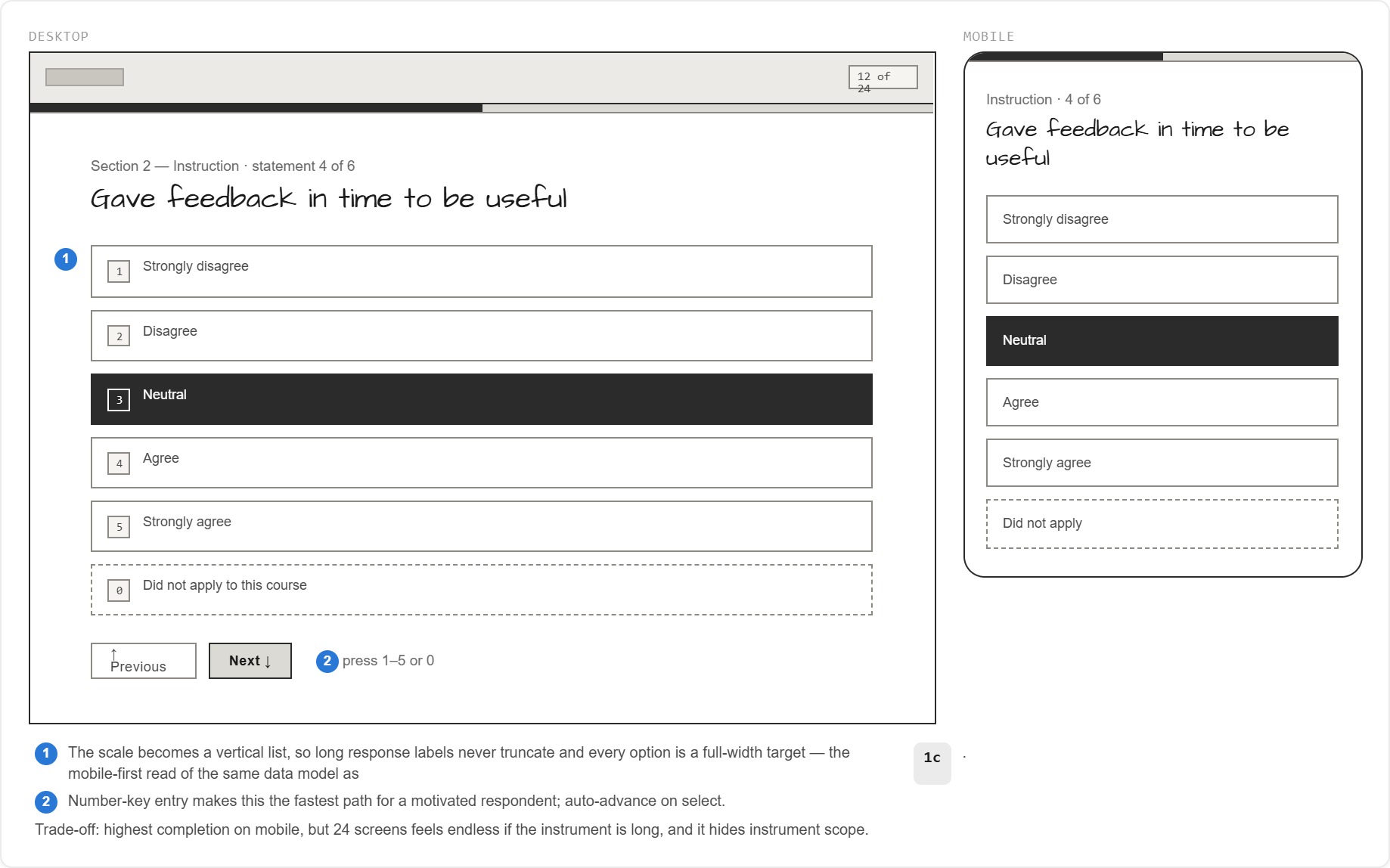
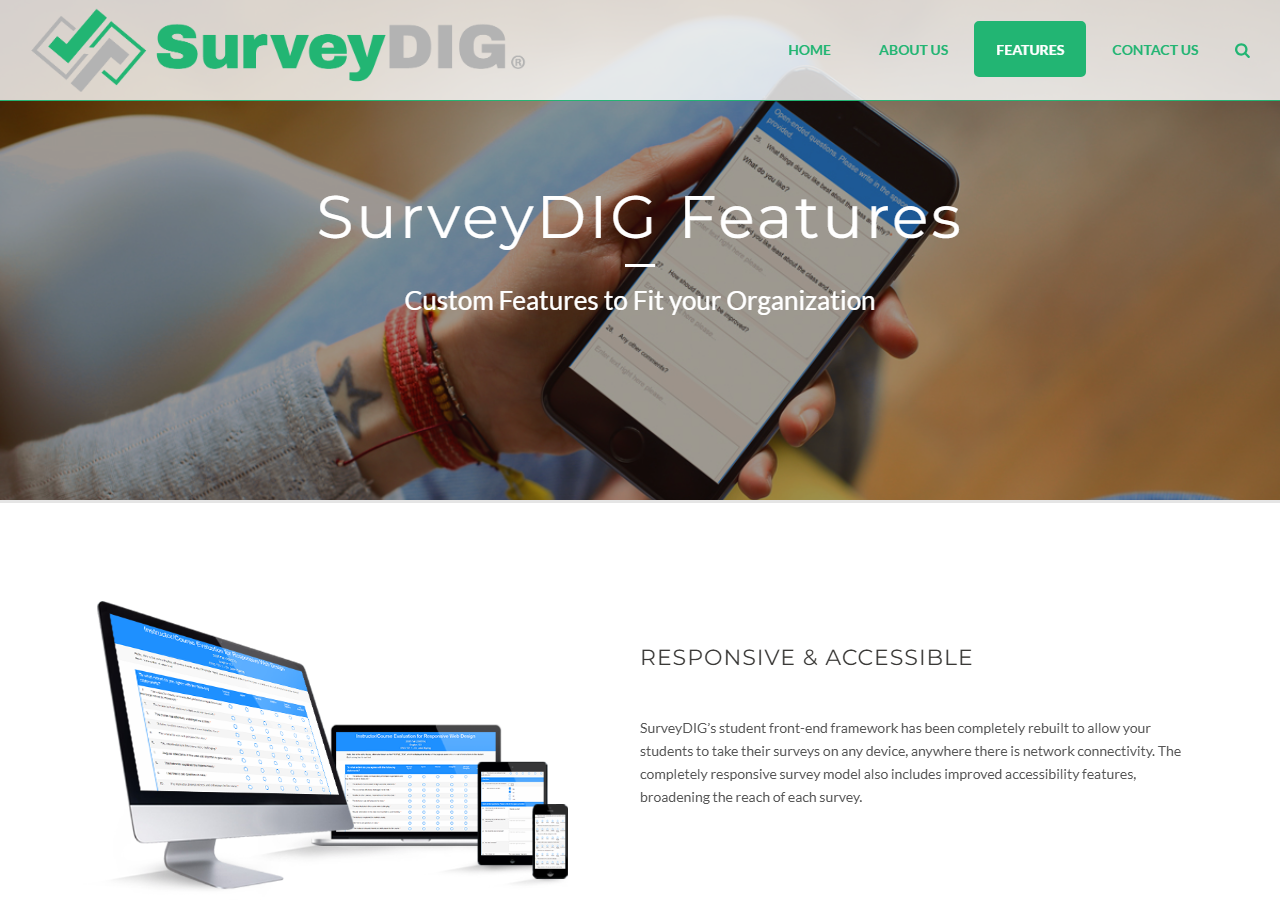
The student survey front end predated the devices students actually used — long evaluation forms that fought small screens.
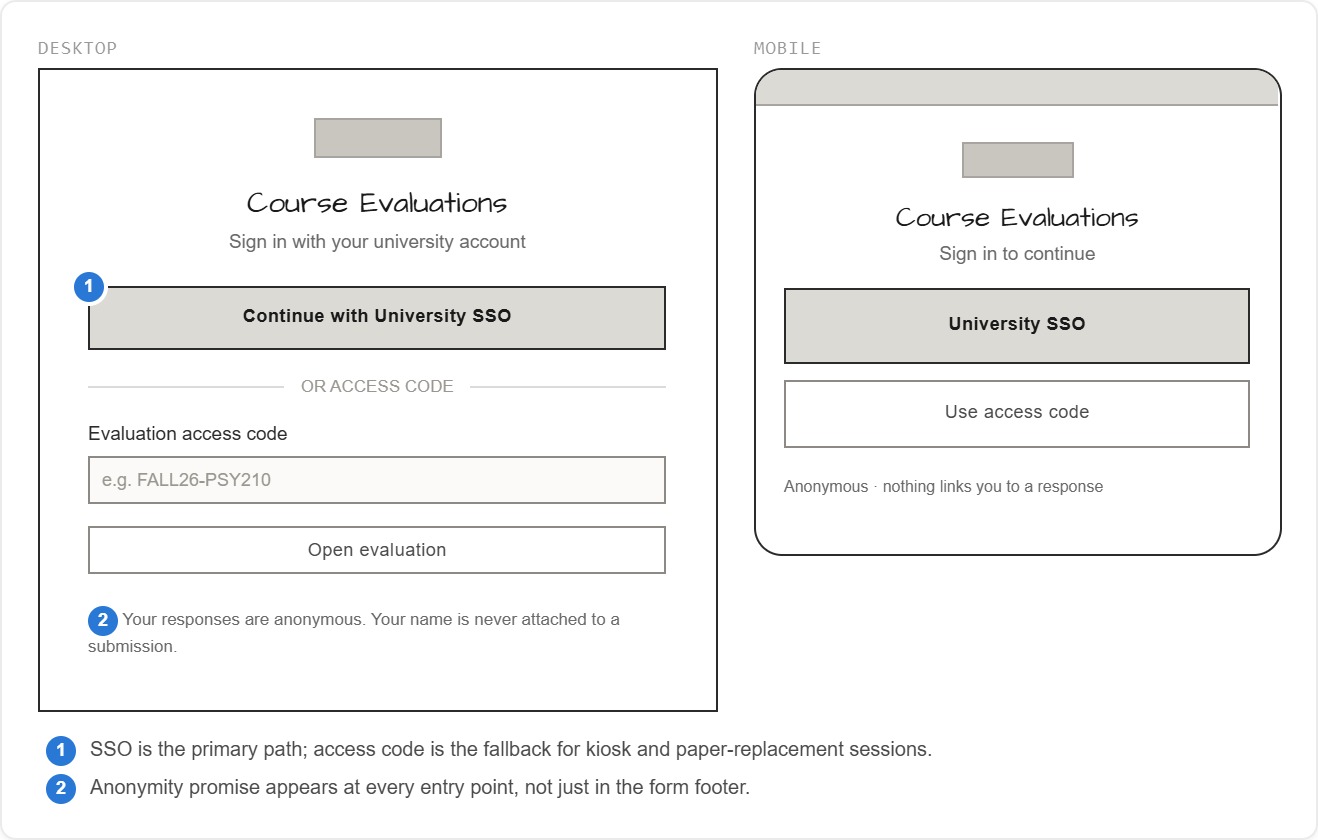
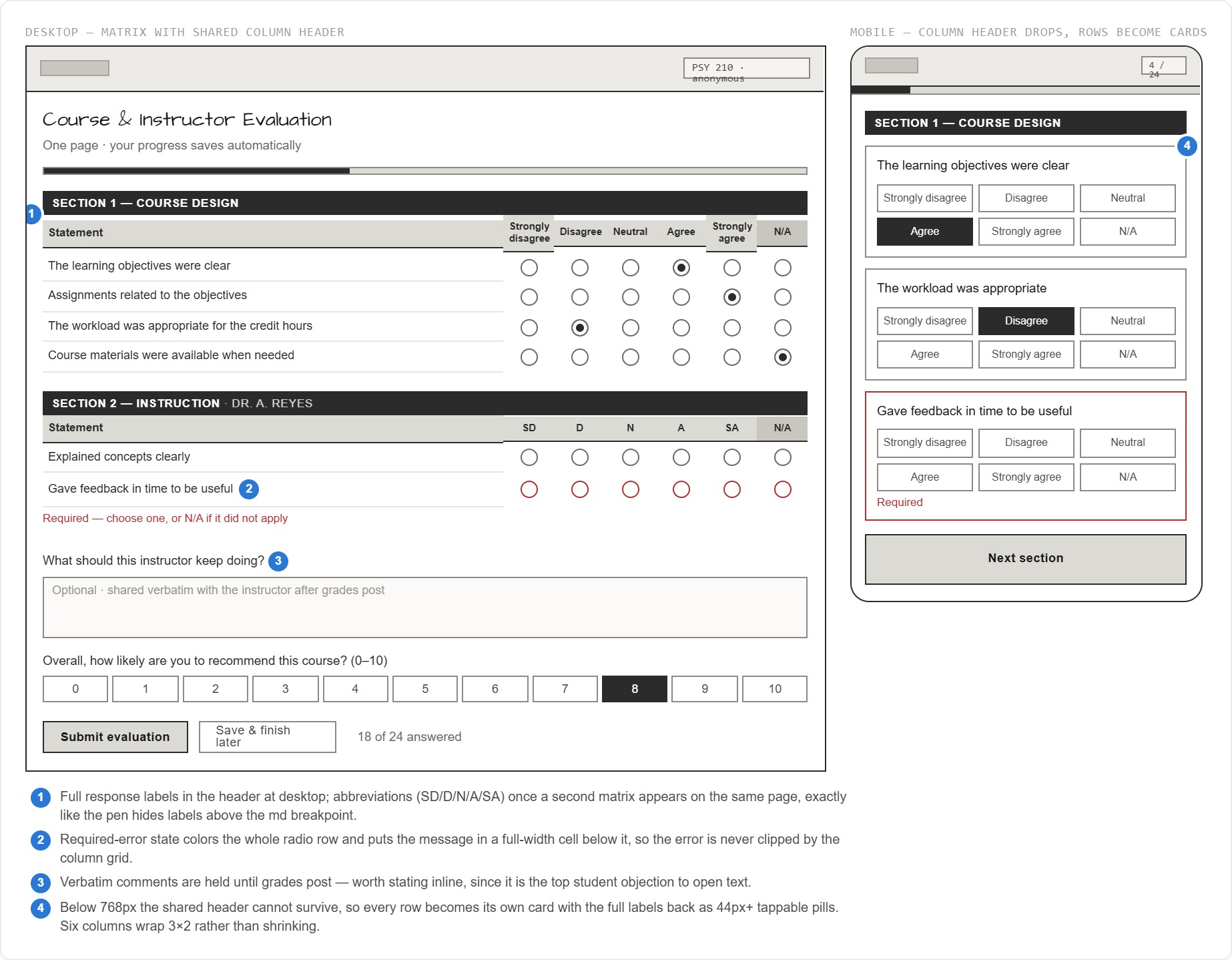
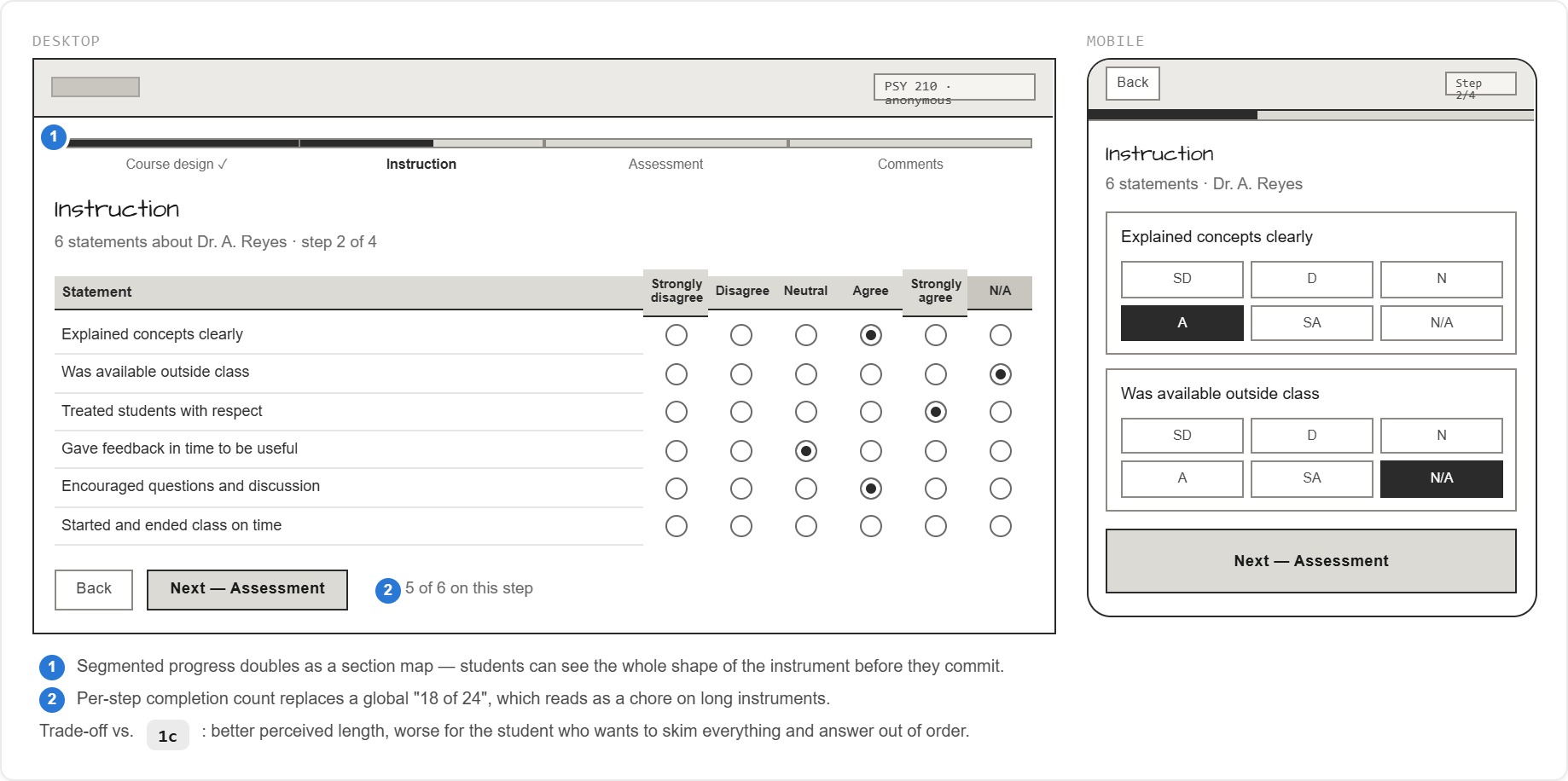
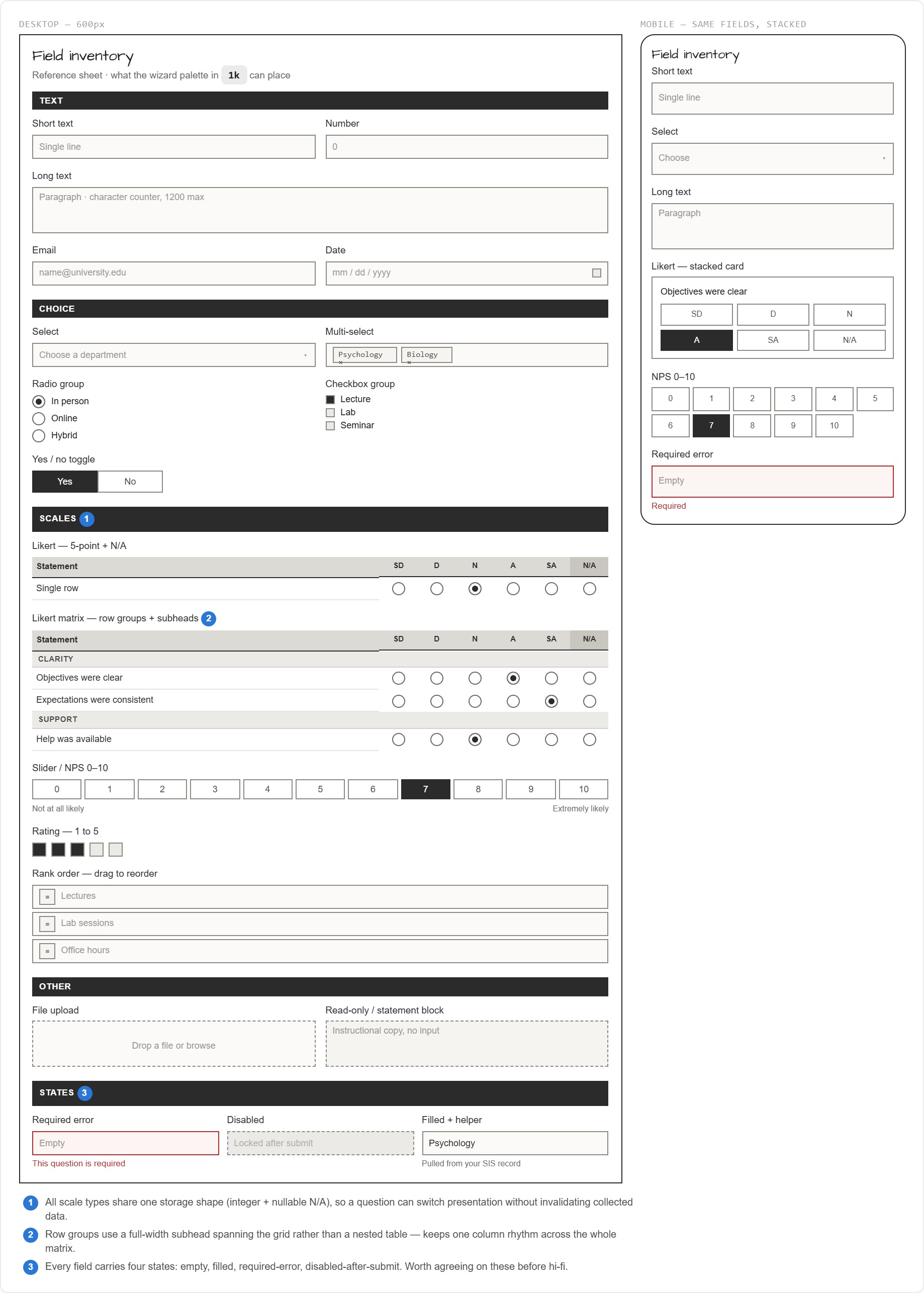
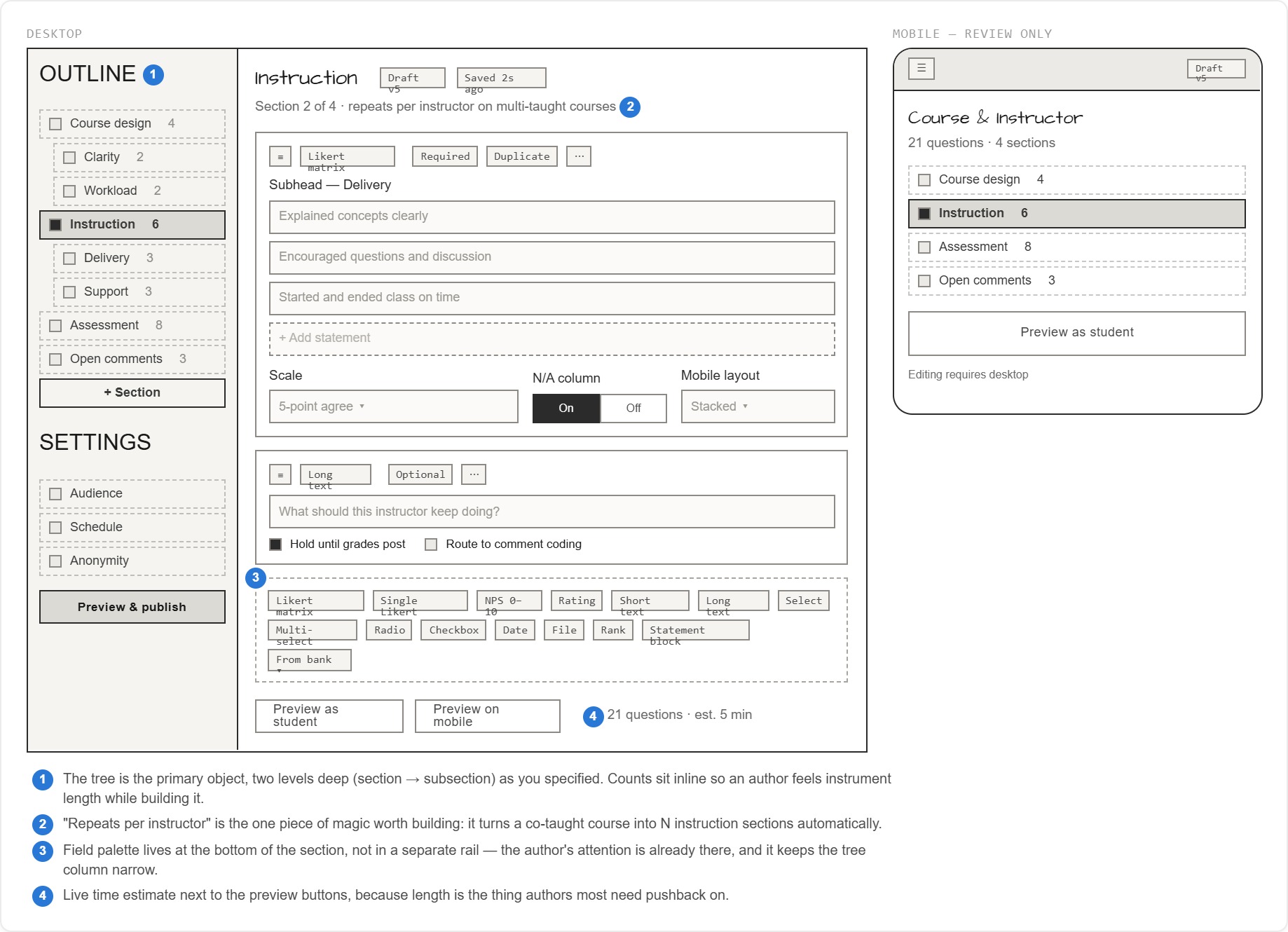
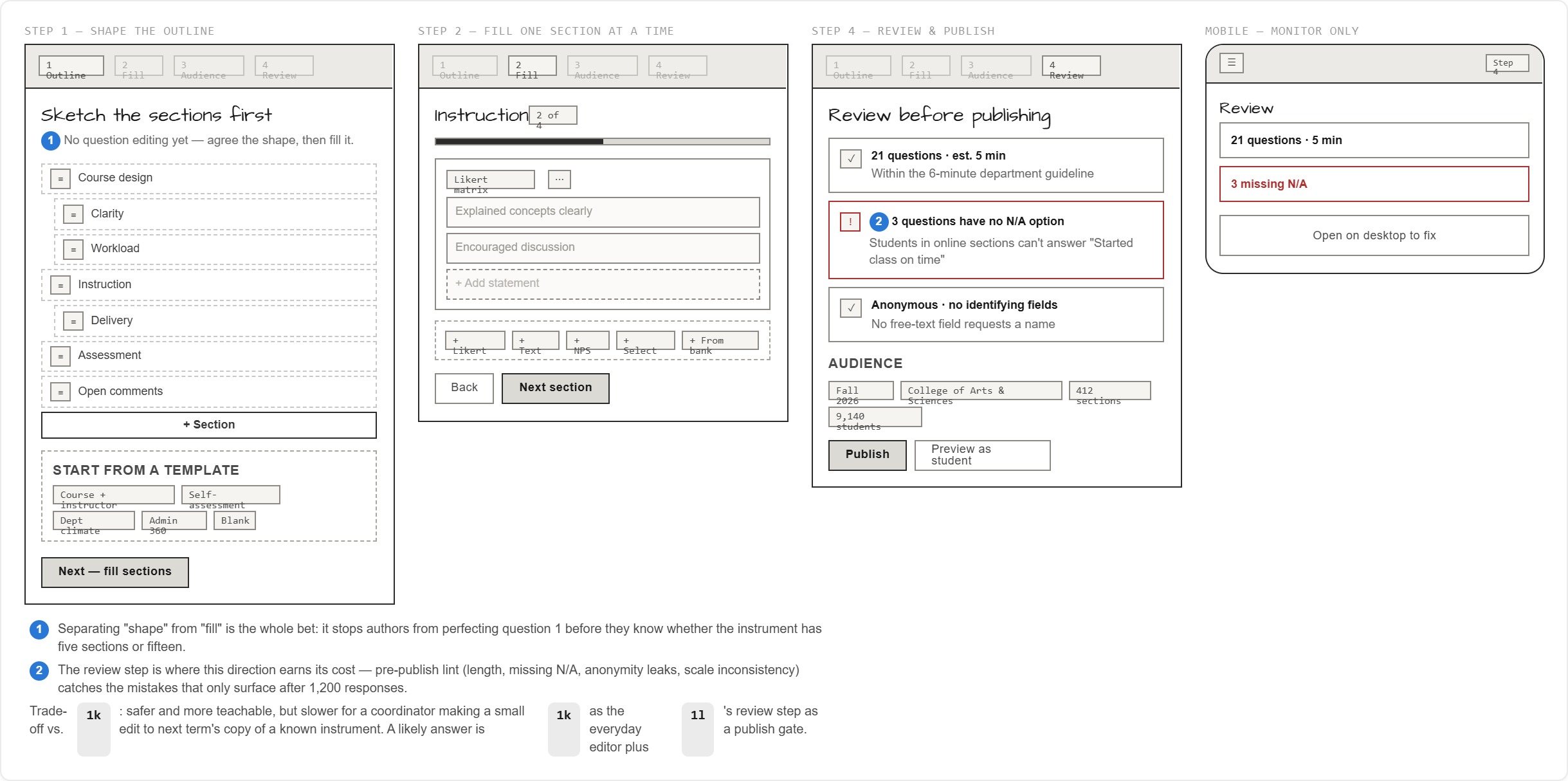
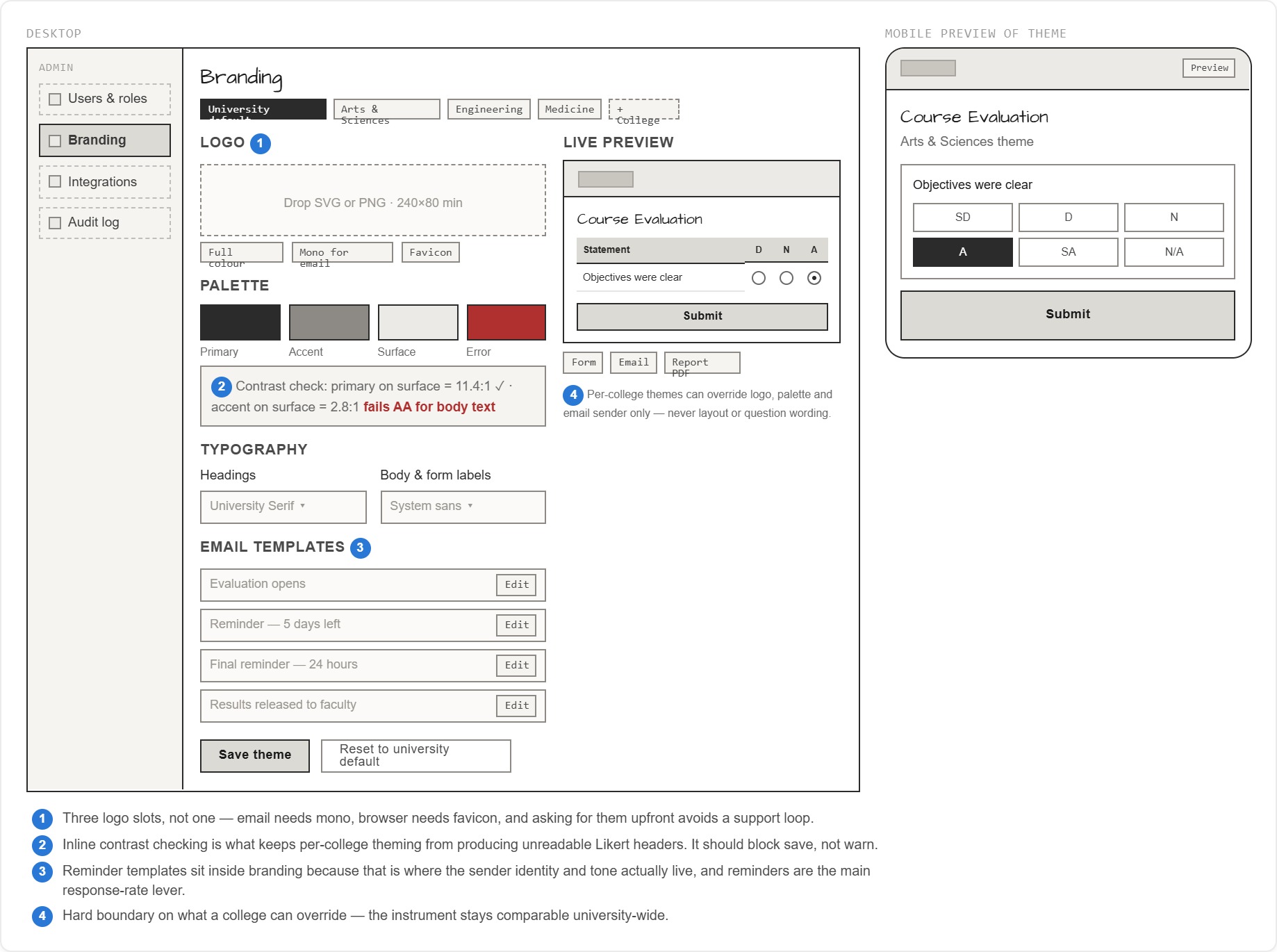
A complete rebuild of the survey front-end framework: fully responsive, so students can take surveys and tests on any device, anywhere there's a connection. Try the live form pattern below.
02 Accessible to Every Student
Accessibility wasn't a feature of the legacy forms — it was a gap, and universities answer to accessibility requirements.
Accessibility built into the rebuilt framework and verified by testing: a 60% increase in accessibility scoring, and 100% screen-reader accessibility across the survey experience.
03 Both Sides of the Classroom
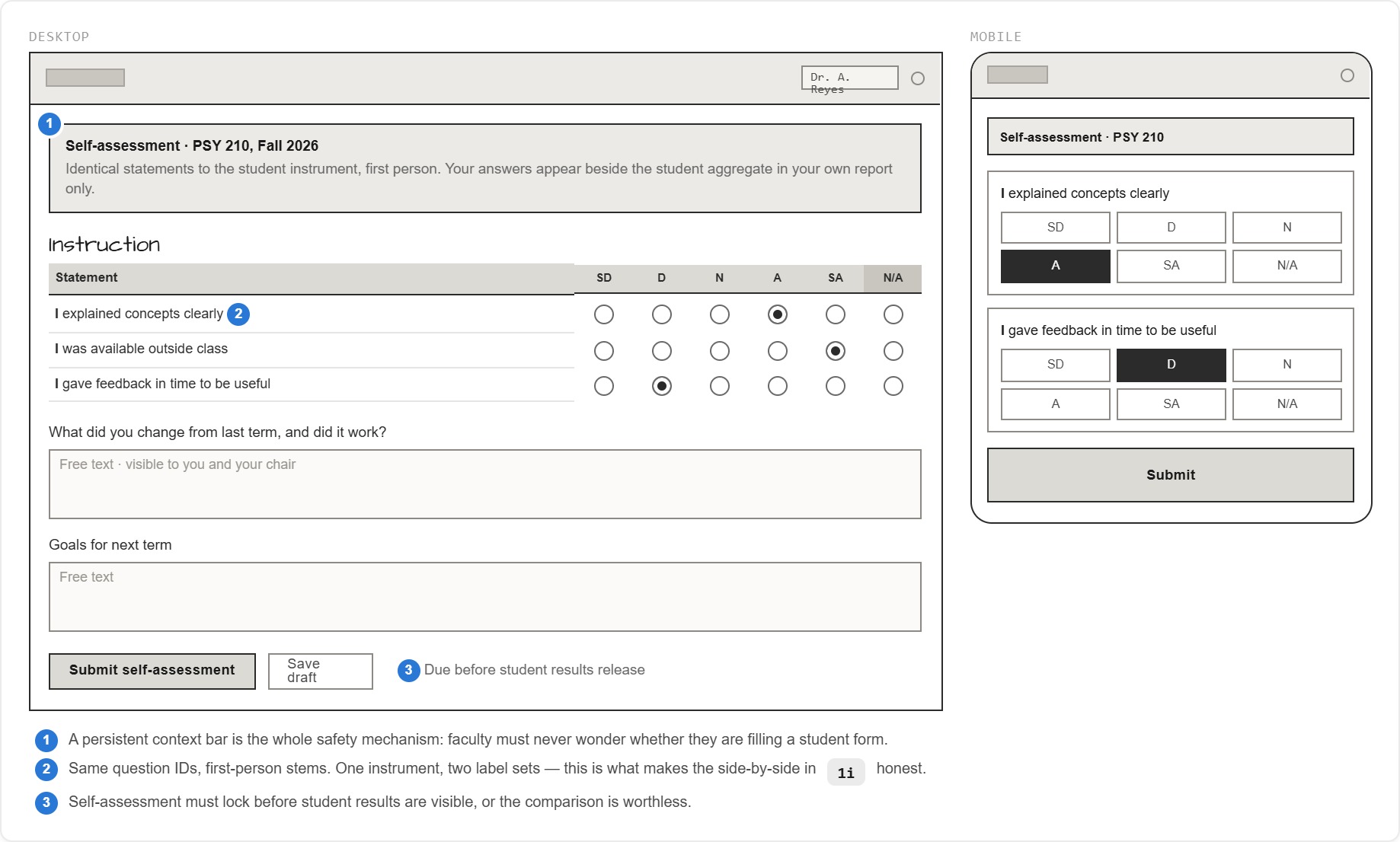
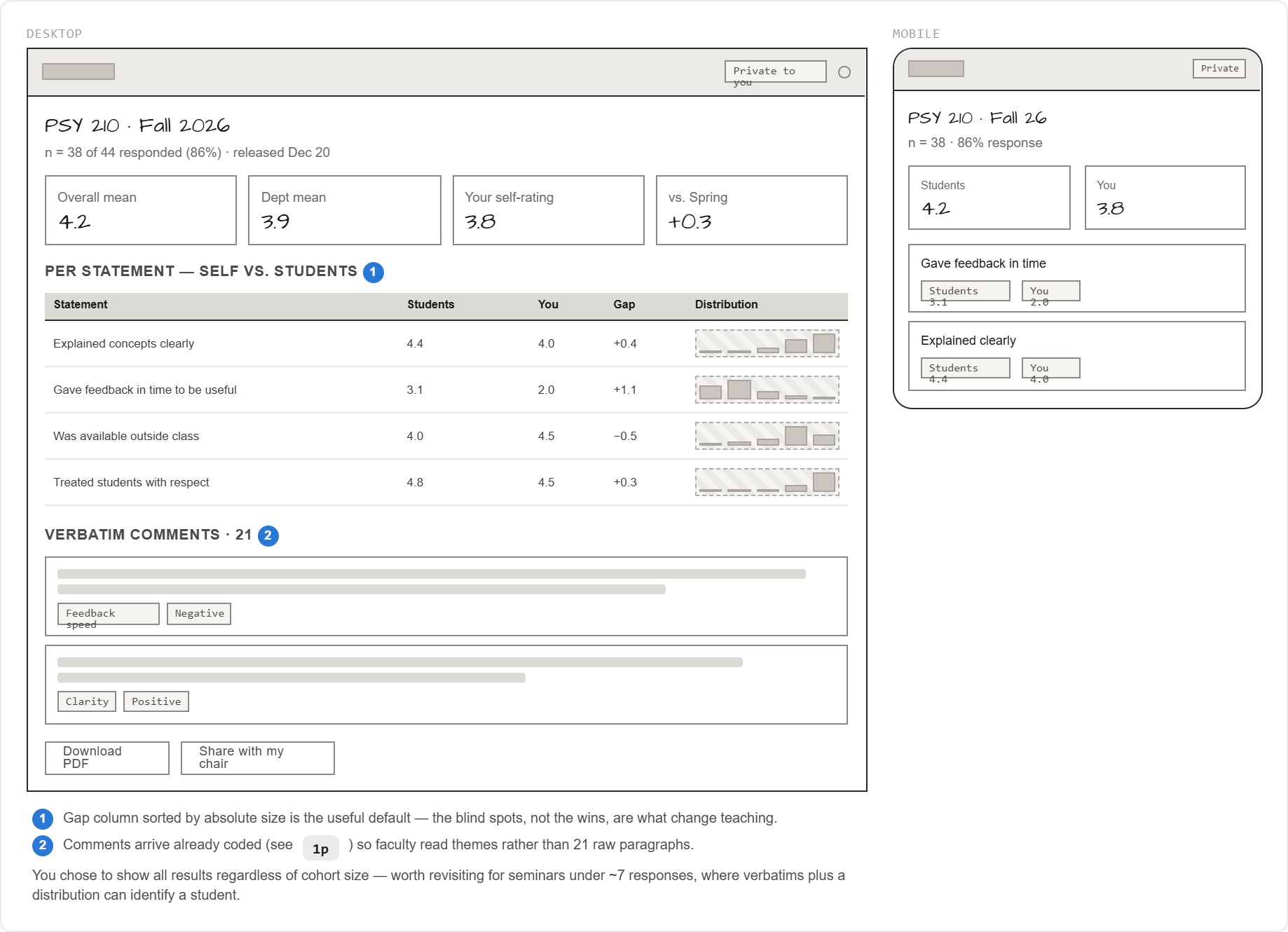
Students, professors, and administrators all touch the product with entirely different jobs to do.
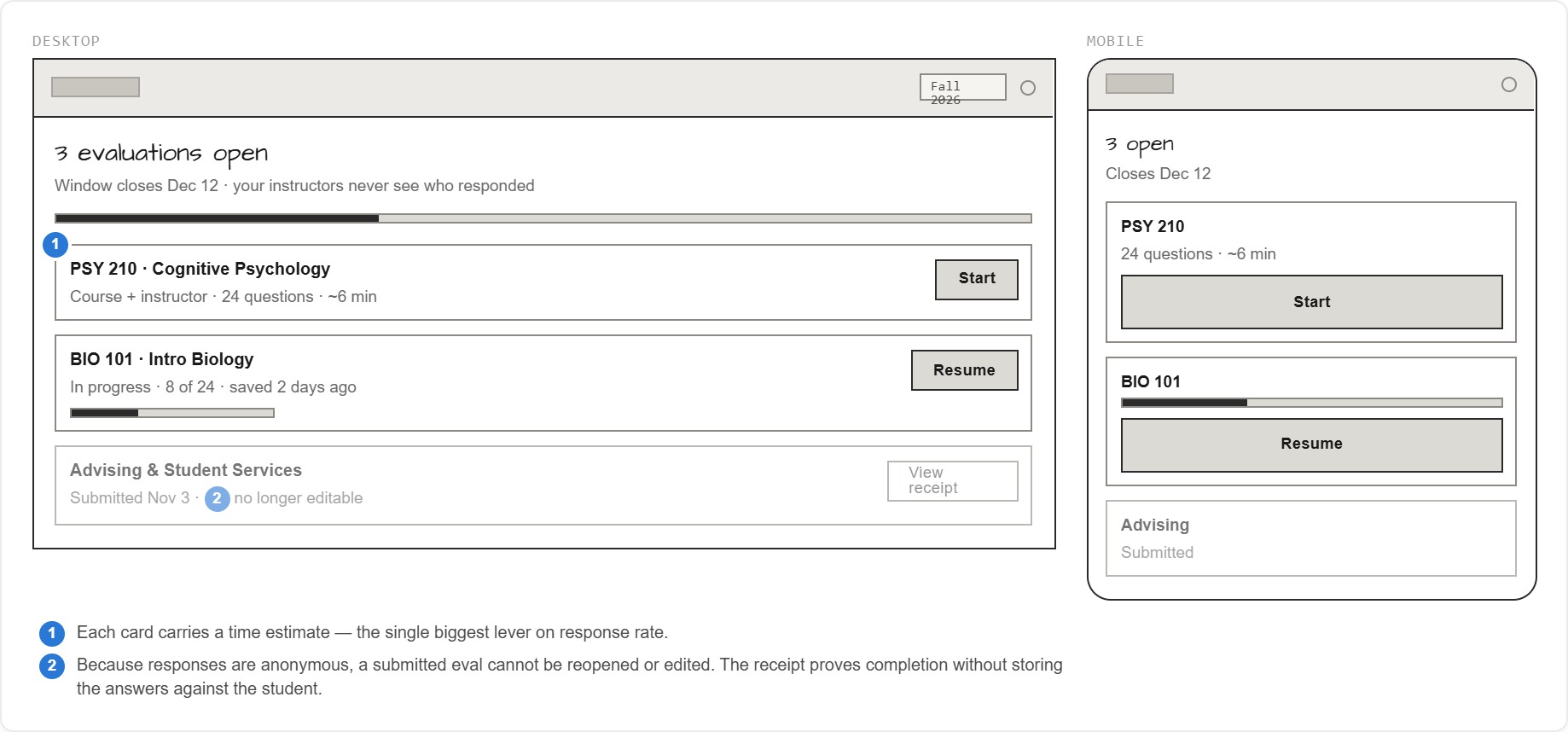
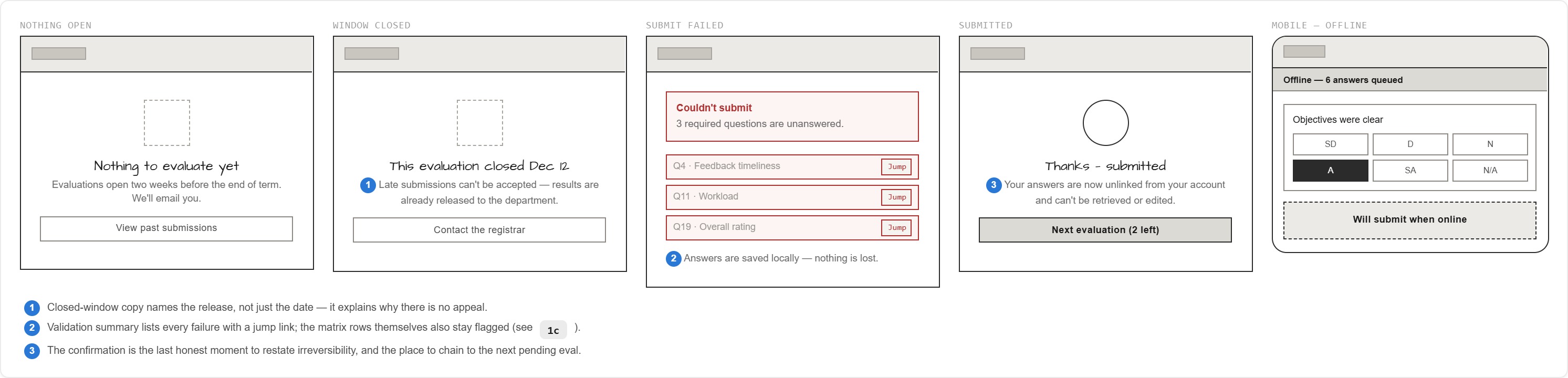
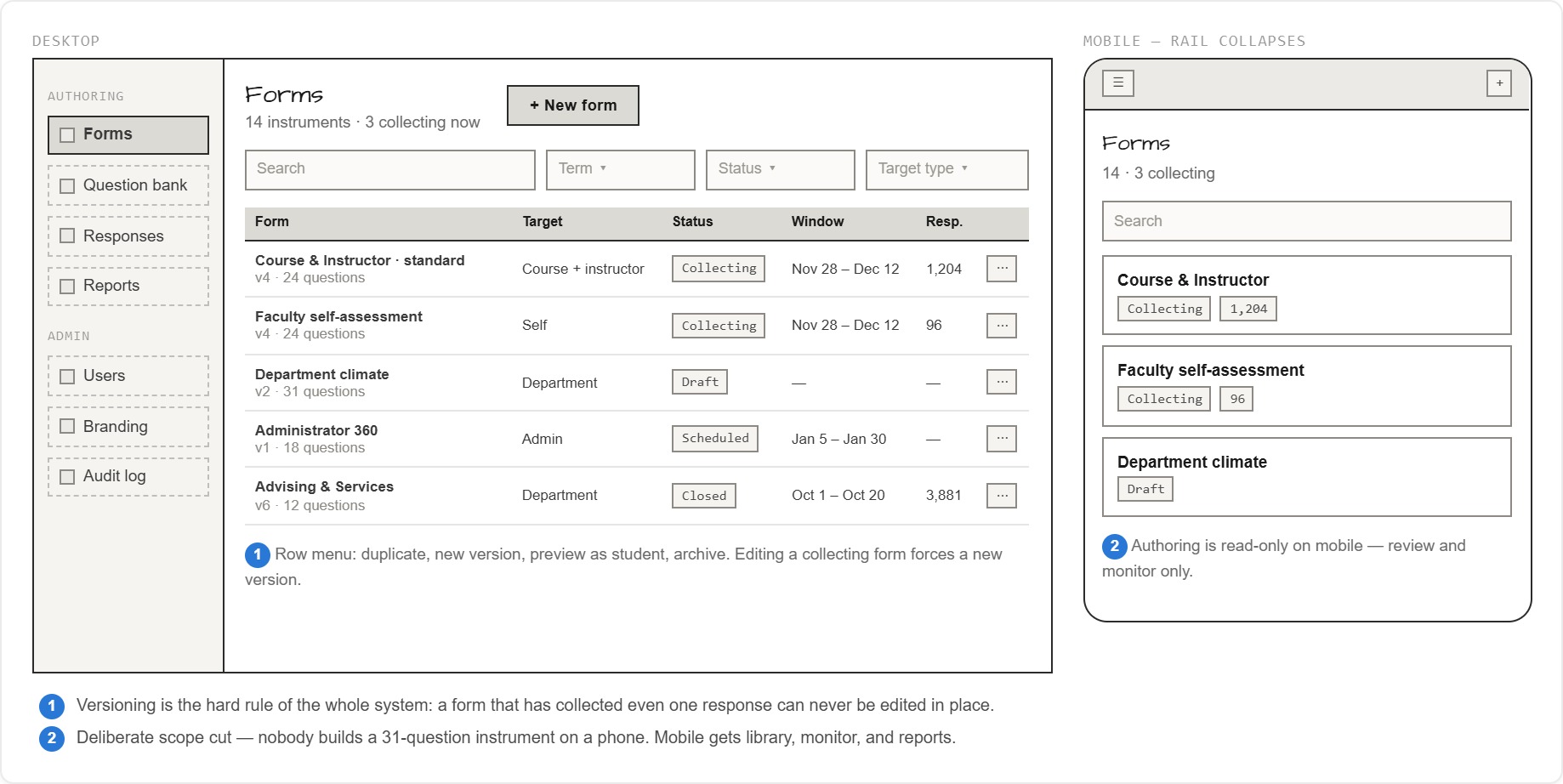
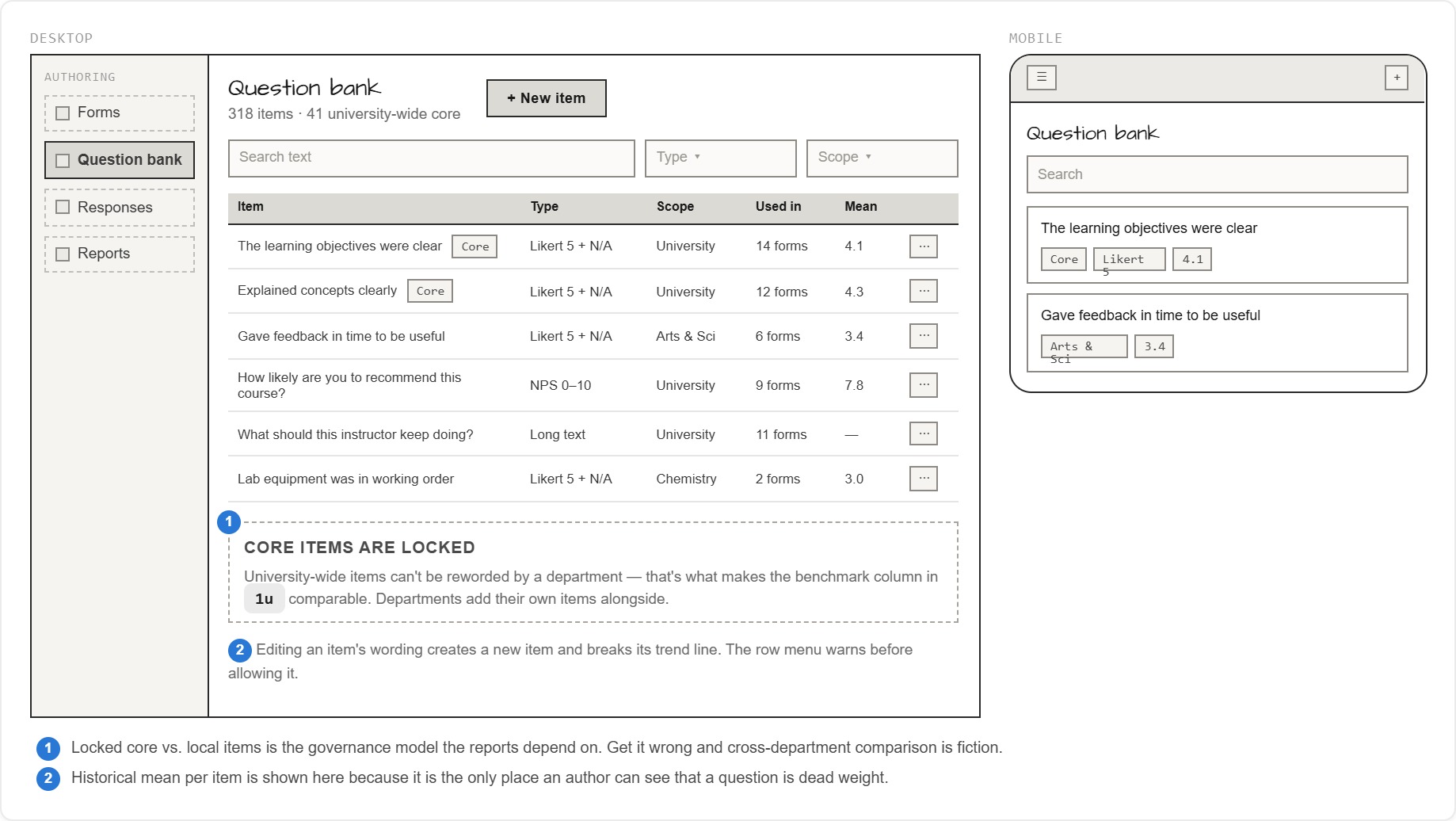
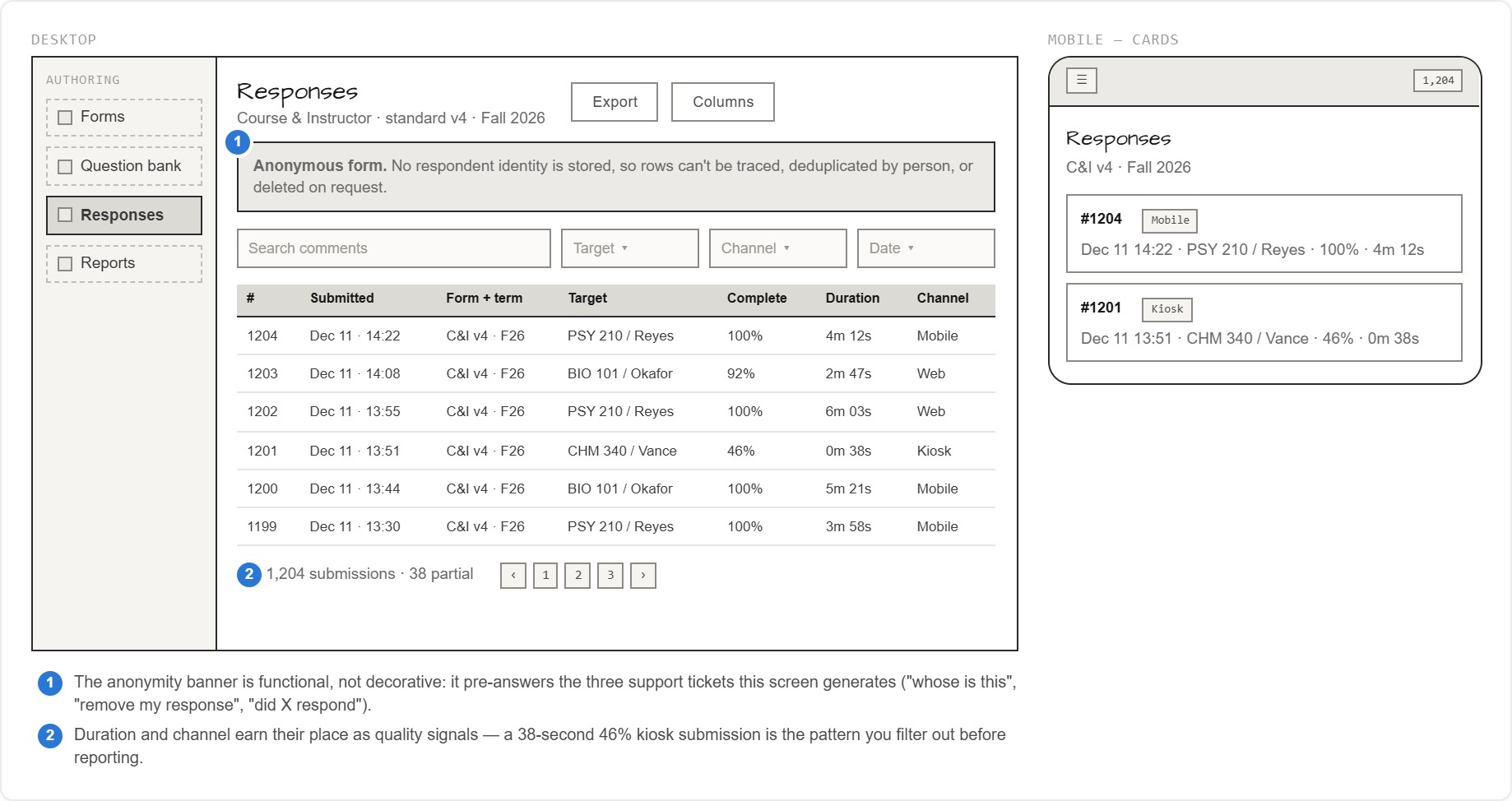
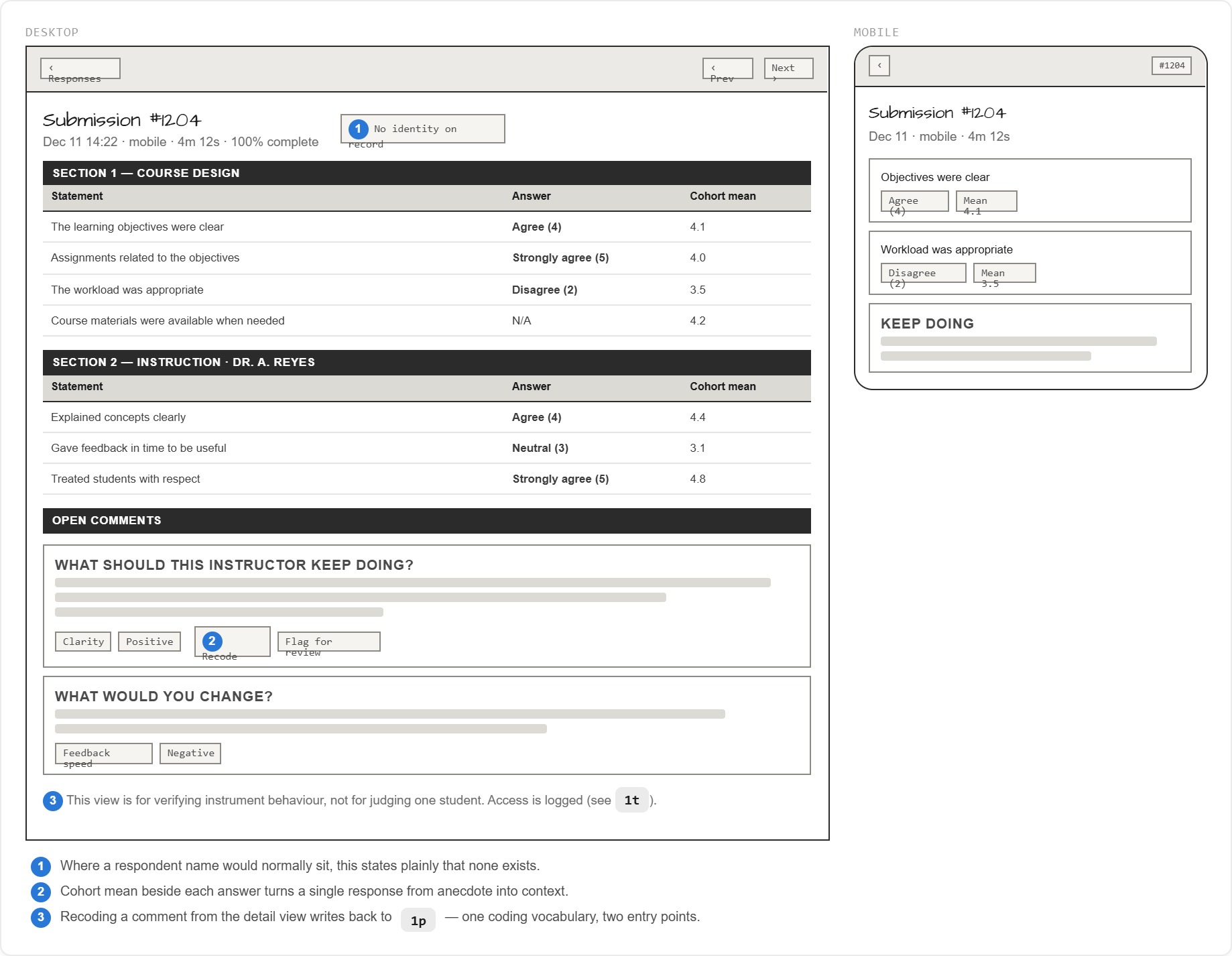
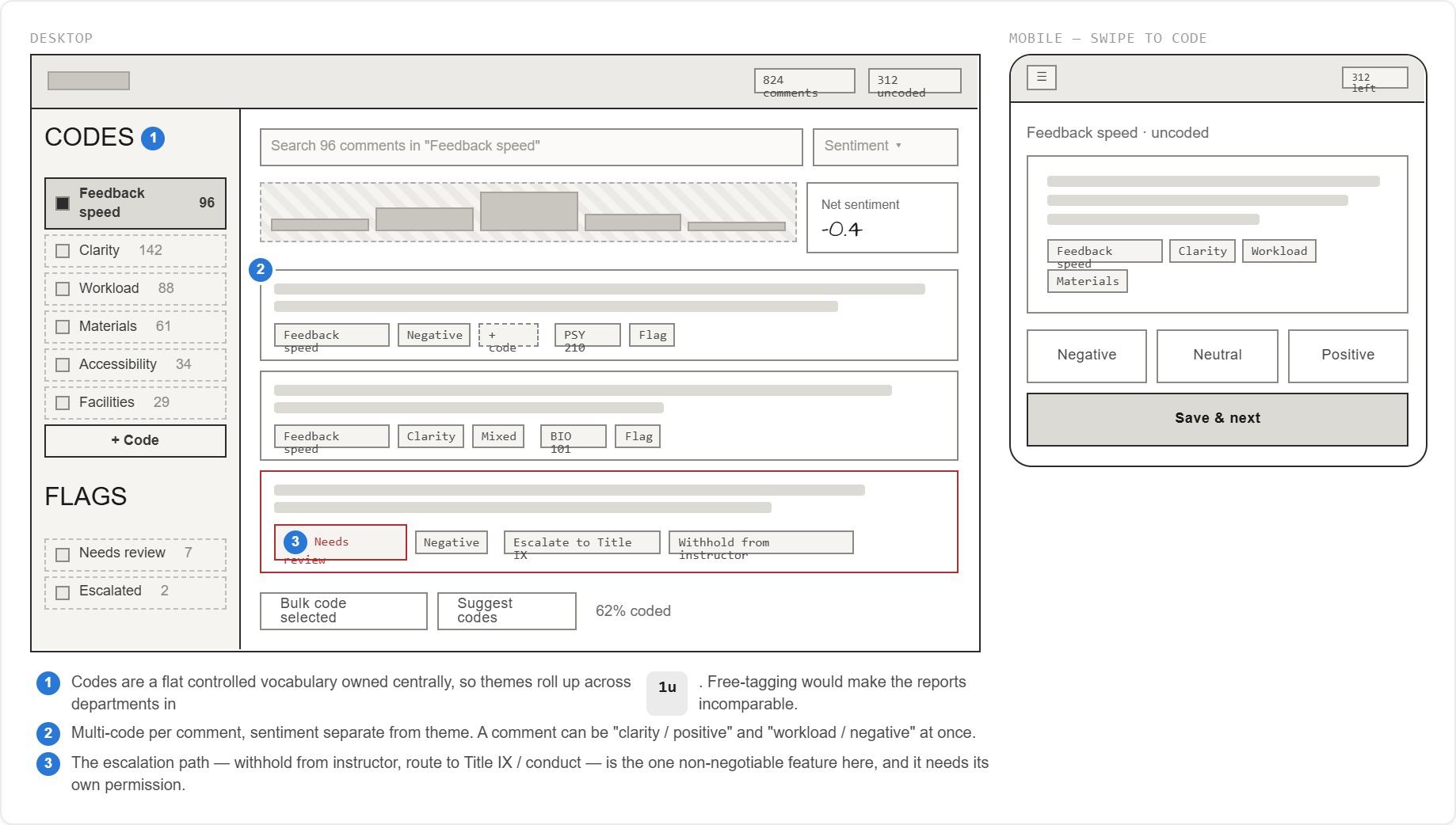
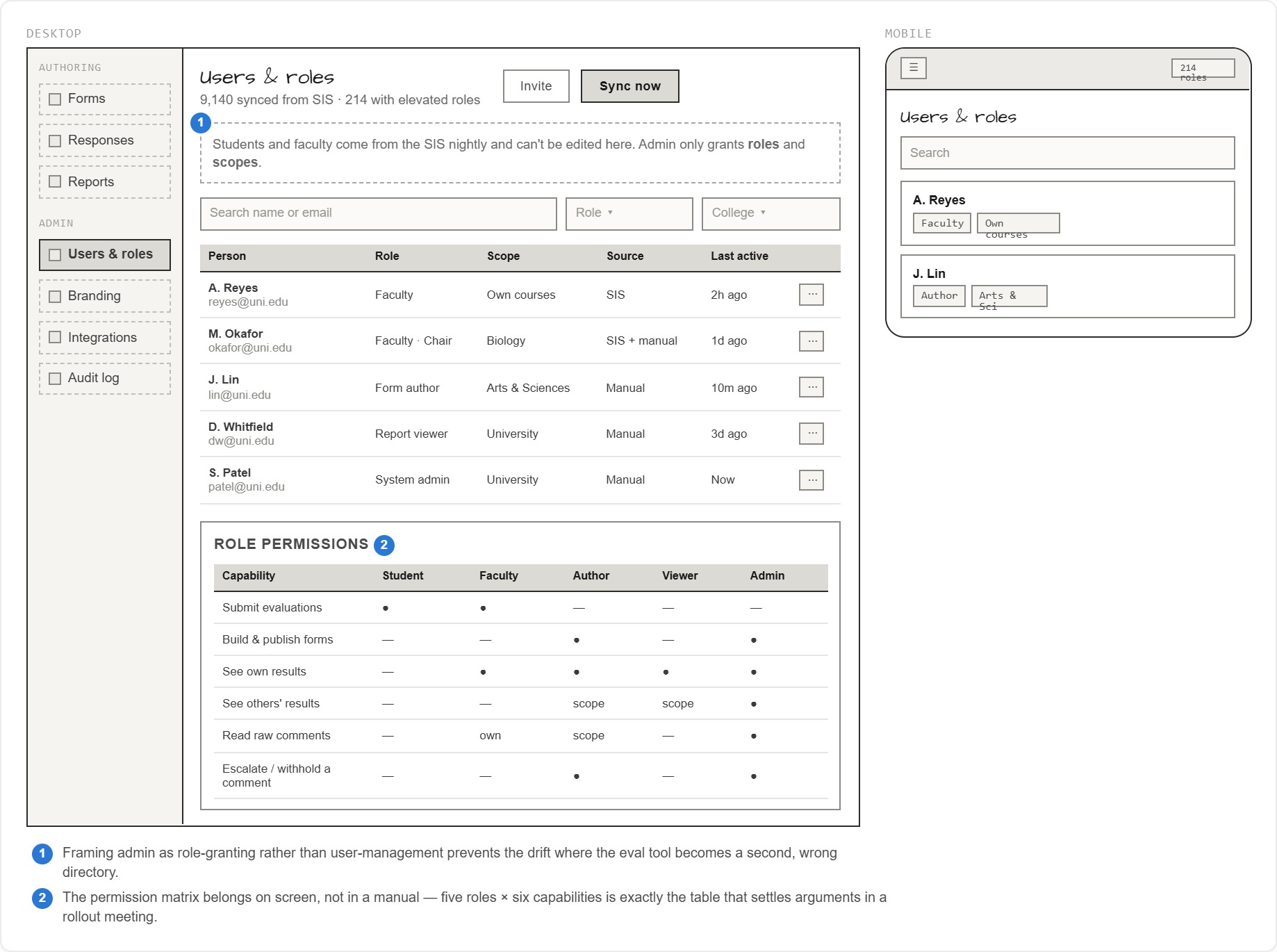
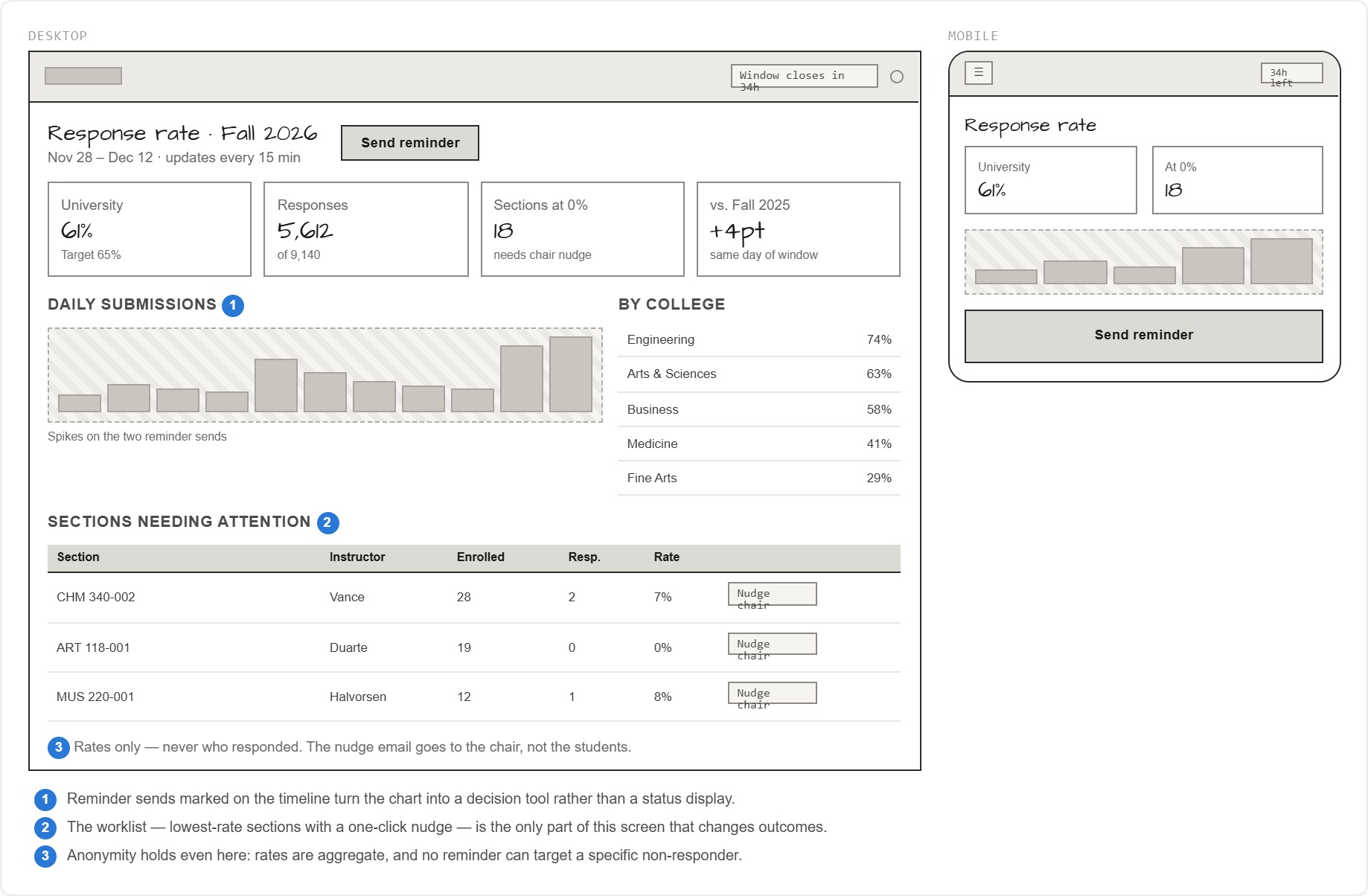
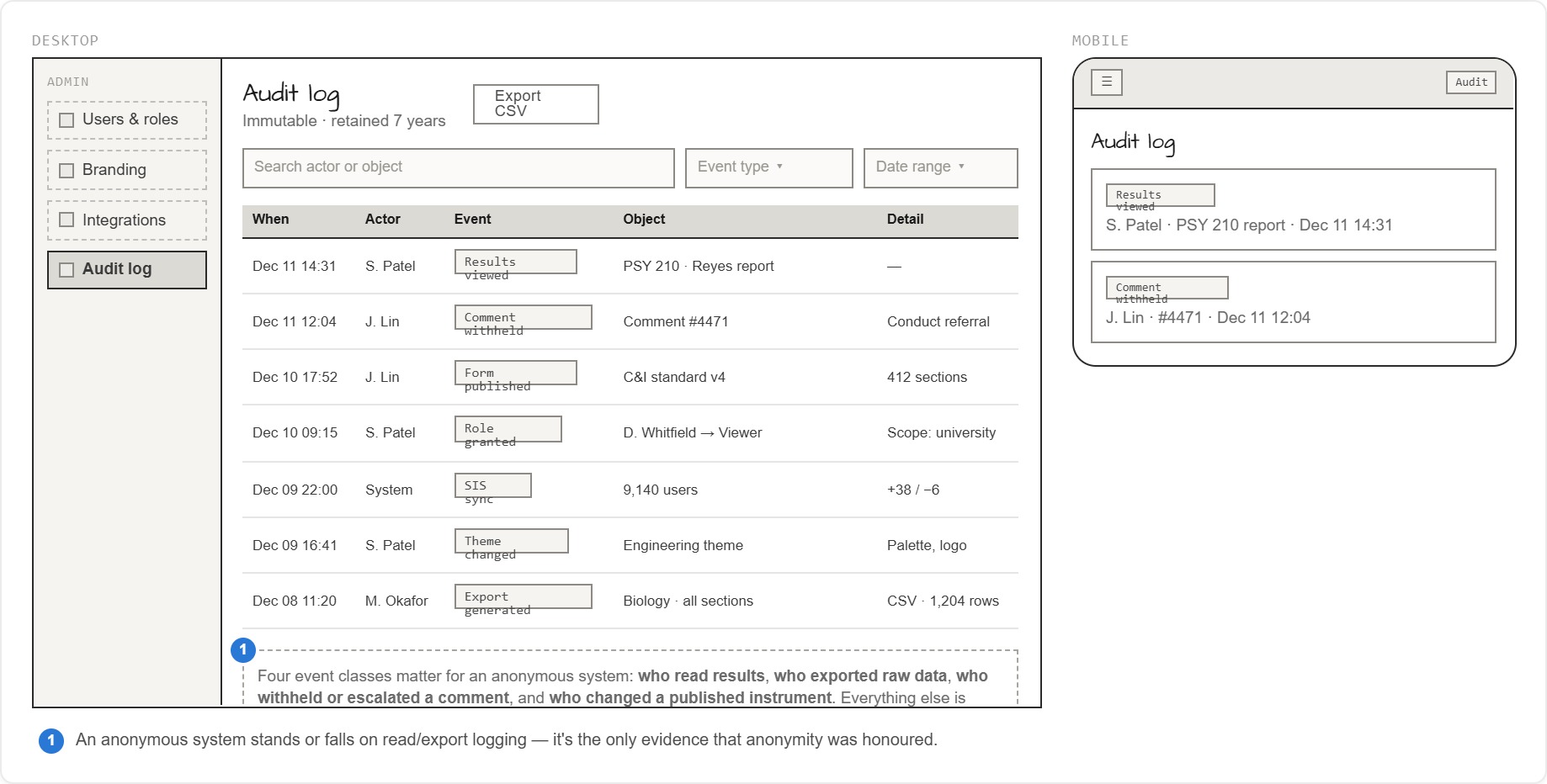
Designed for the full loop — students completing tests and course surveys, and the evaluation flows for professors and university admin on the other side.
The Outcome
Accessibility and responsiveness weren't polish — they were the product thesis. Rebuilding the forms around every device and every reader raised student completion 45%, which is the number a course-evaluation product lives or dies by.
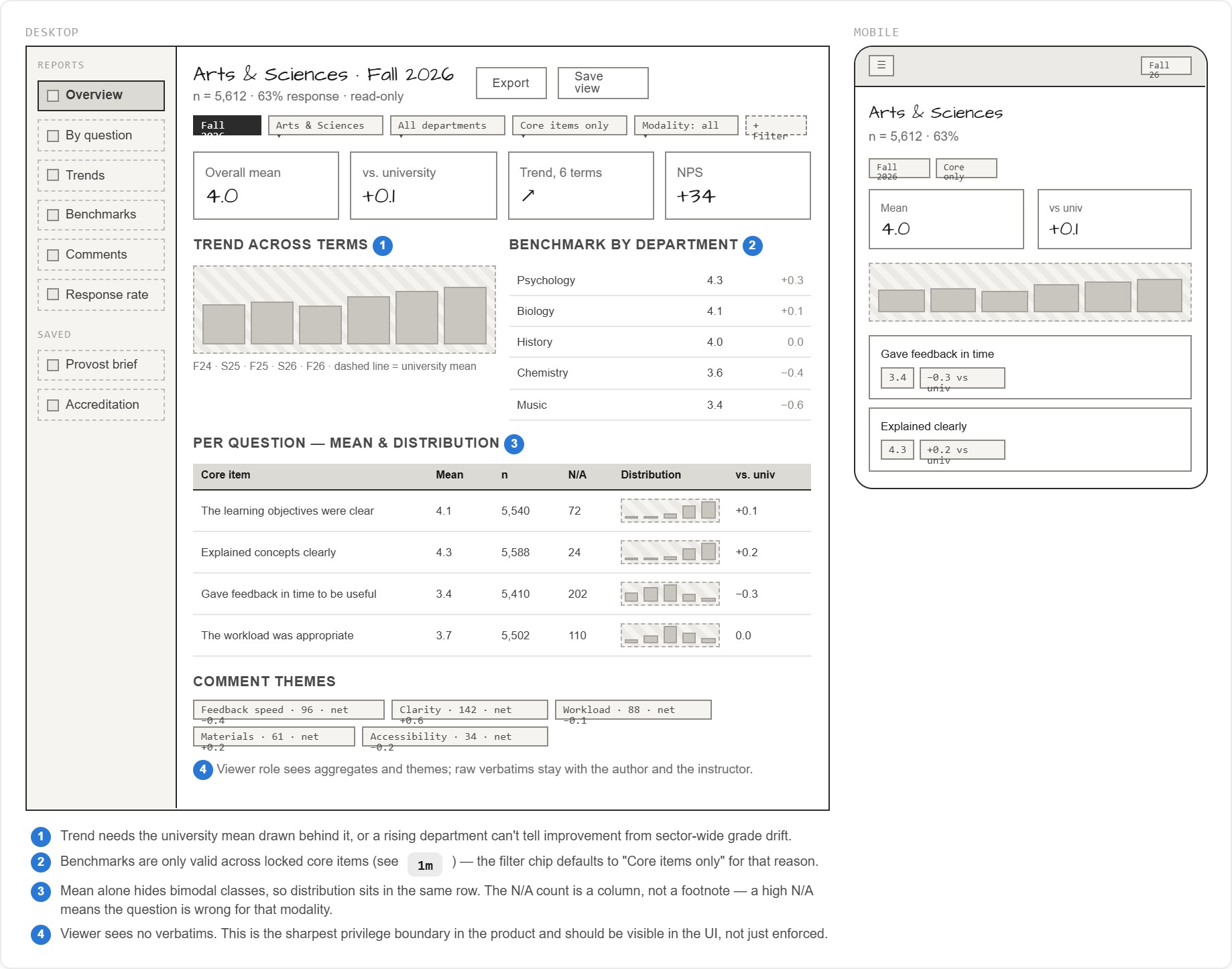
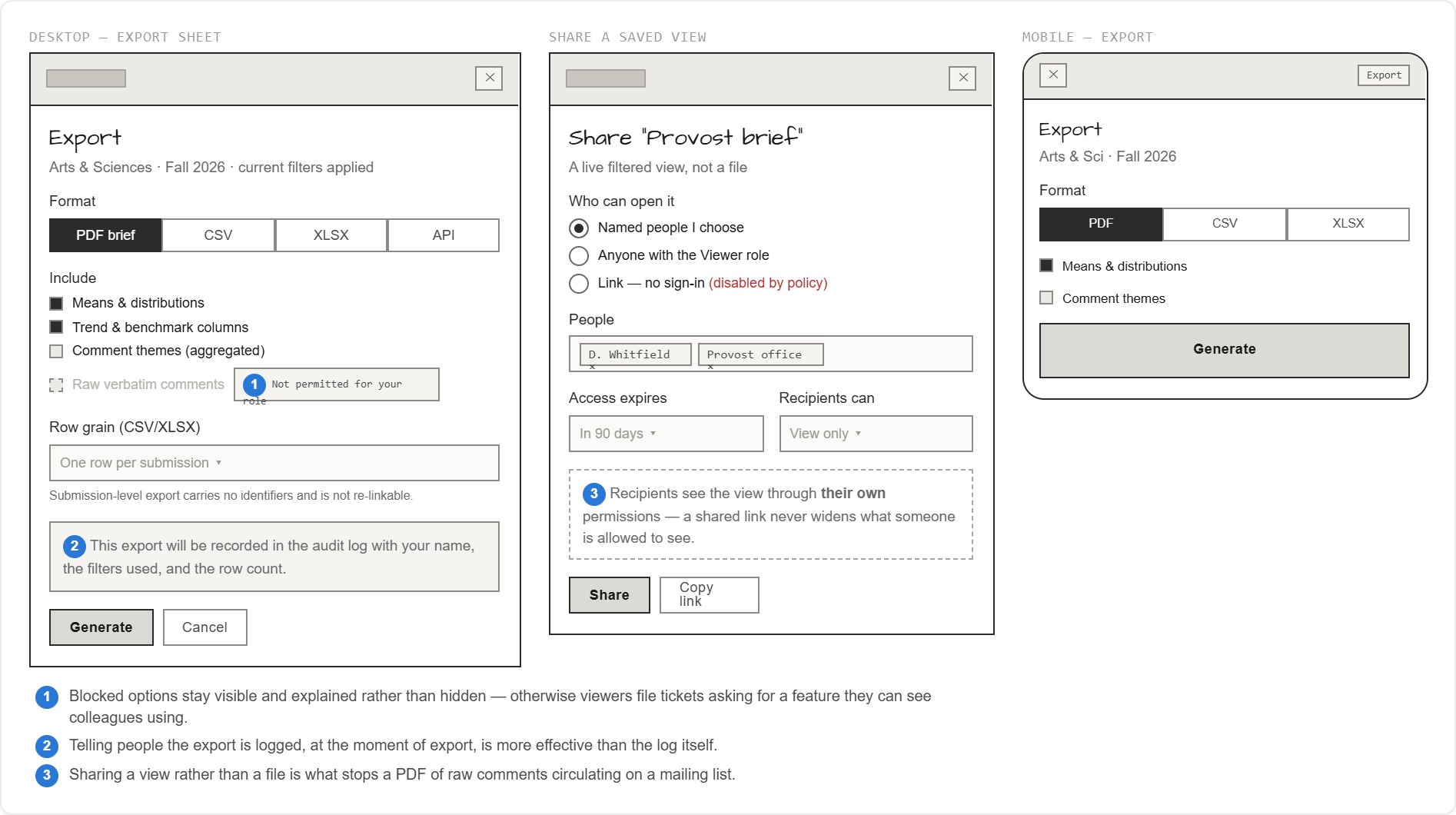
The Wireframes