Case Study
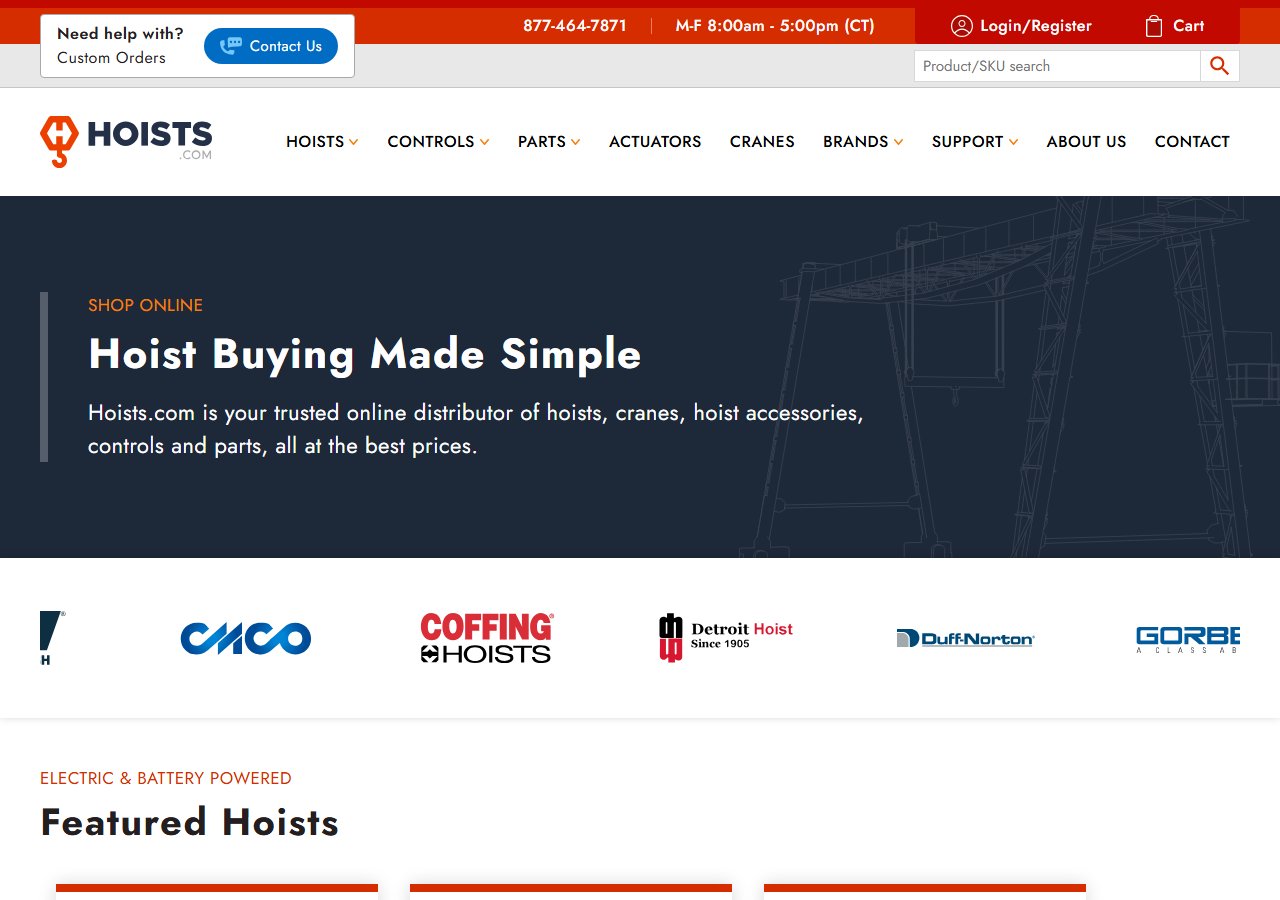
Building Hoists.com
From no digital presence to $1.2M in year one — now $12M a year. Built by learning an industry from scratch.
- Client
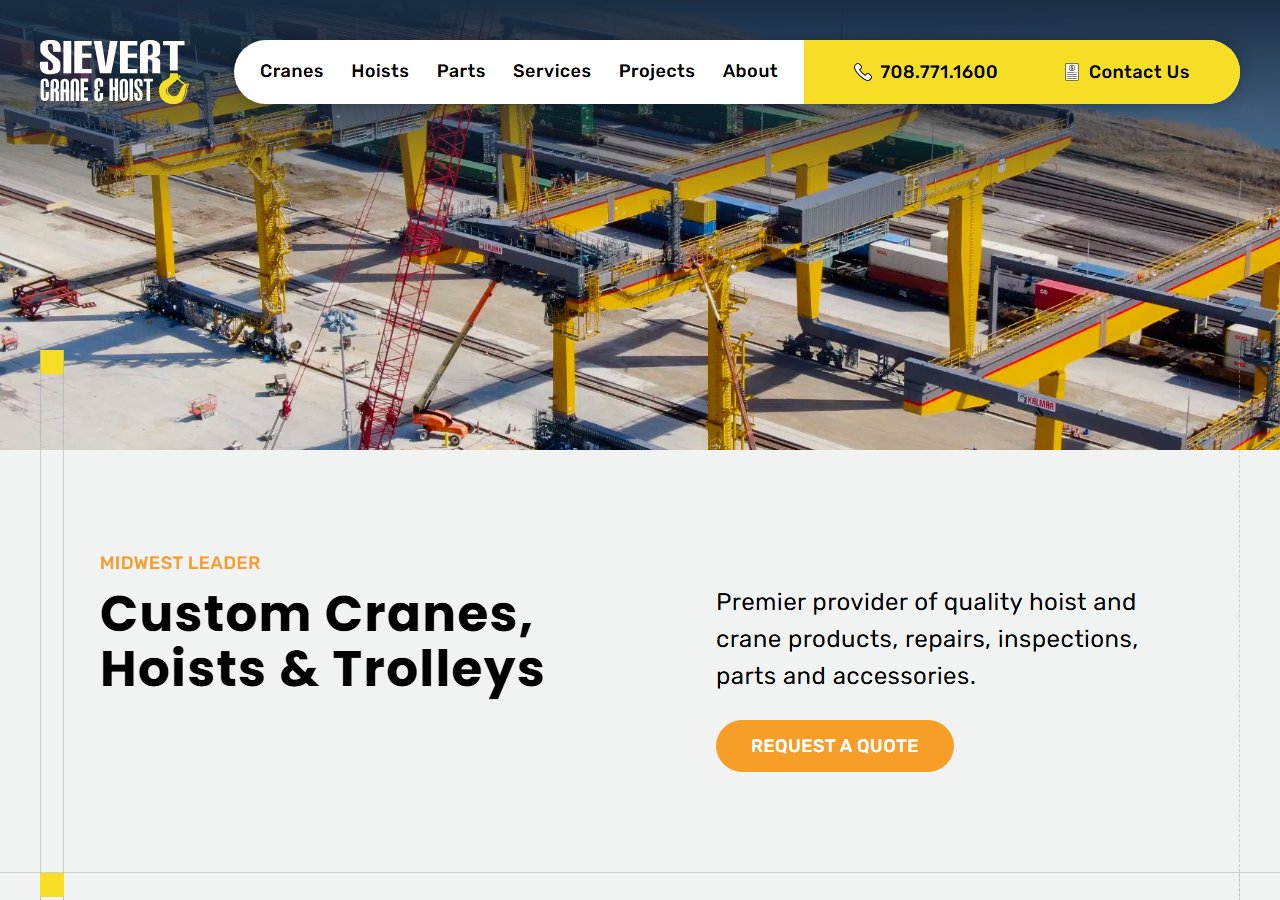
- Sievert Crane & Hoist — the DTC arm, built from zero
- Role
- Director of E-Commerce & Product Development
- Timeline
- Dec 2019 – Feb 2023
- Team
- Scaled from solo to a 5-person department (UX, Content, Development, Operations)
The Challenge
No catalog, no product data — just 3,500+ SKUs in an ERP and a sales team that knew the product cold. Industrial buyers are deeply technical, and every spec matters. The filter UI exposed every value as its own checkbox — buyers averaged 5,000–10,000 page visits to find the right product.
As founding digital lead reporting to the President, I was solo designer, developer, and strategist for 18 months, then scaled the department to five.
What I Did
01 Domain Immersion
I knew e-commerce, not hoists — and product knowledge lived only in PDF spec sheets, ERP line items, and people's heads.
Ran between sales, mechanics, techs, and metal fabricators to learn the domain firsthand — then built the entire catalog around real buyer mental models instead of the spec sheet.
02 Catalog Architecture
No taxonomy for 3,500+ SKUs spanning hoists, cranes, trolleys, and accessories.
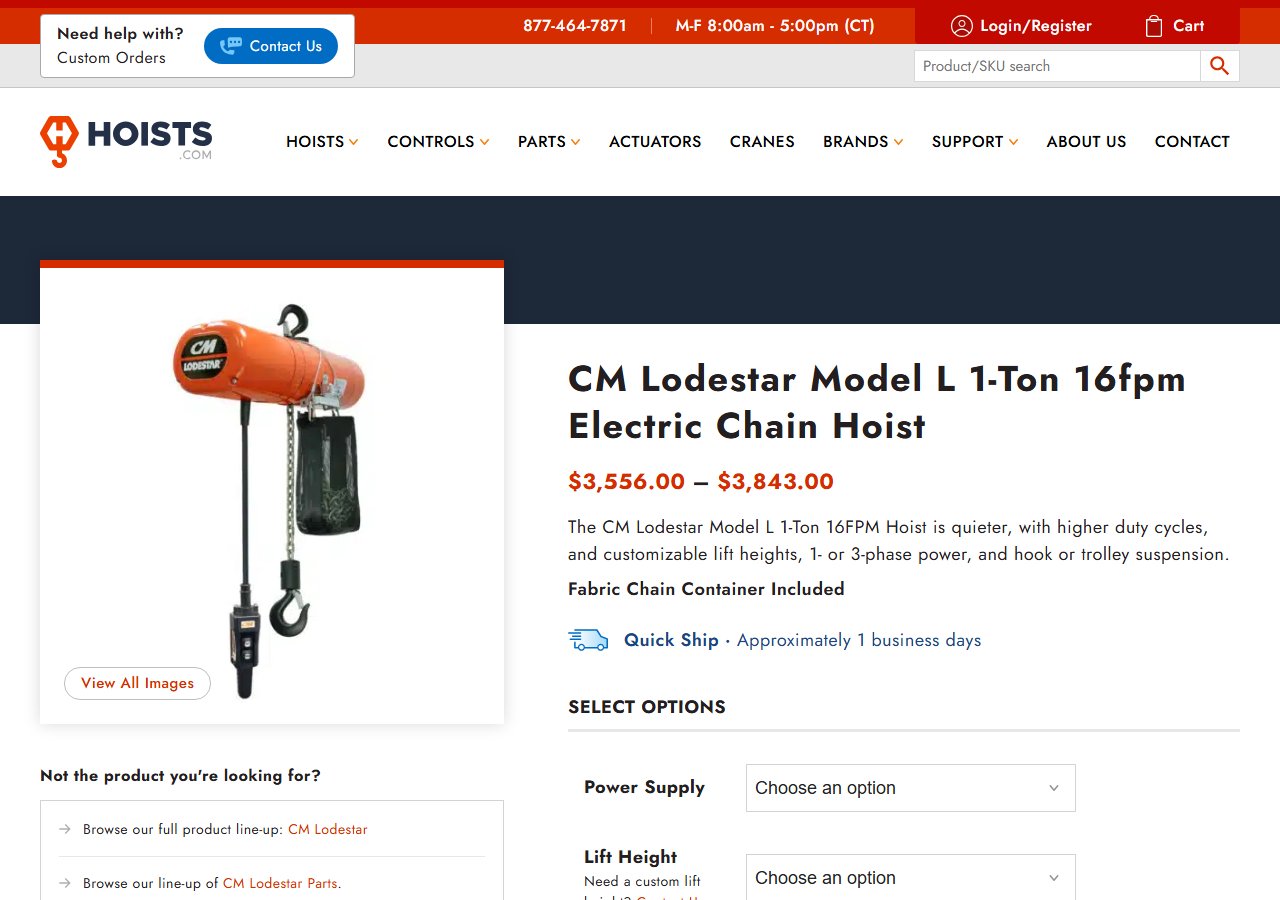
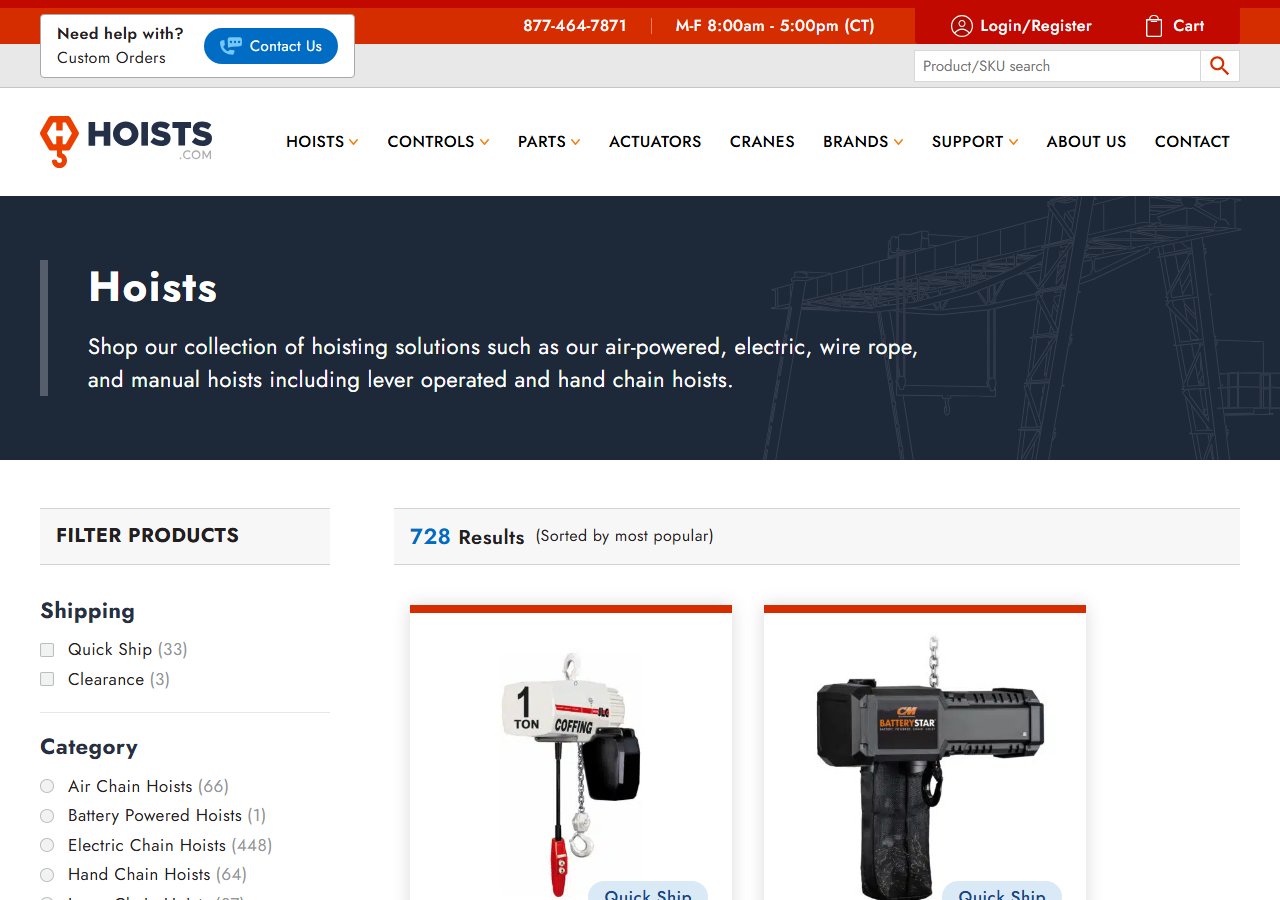
A five-tier hierarchy — Product Family → Type → Capacity Class → Configuration → Variant — with smart filter logic suppressing incompatible combinations in real time.
03 Smart Range Filters
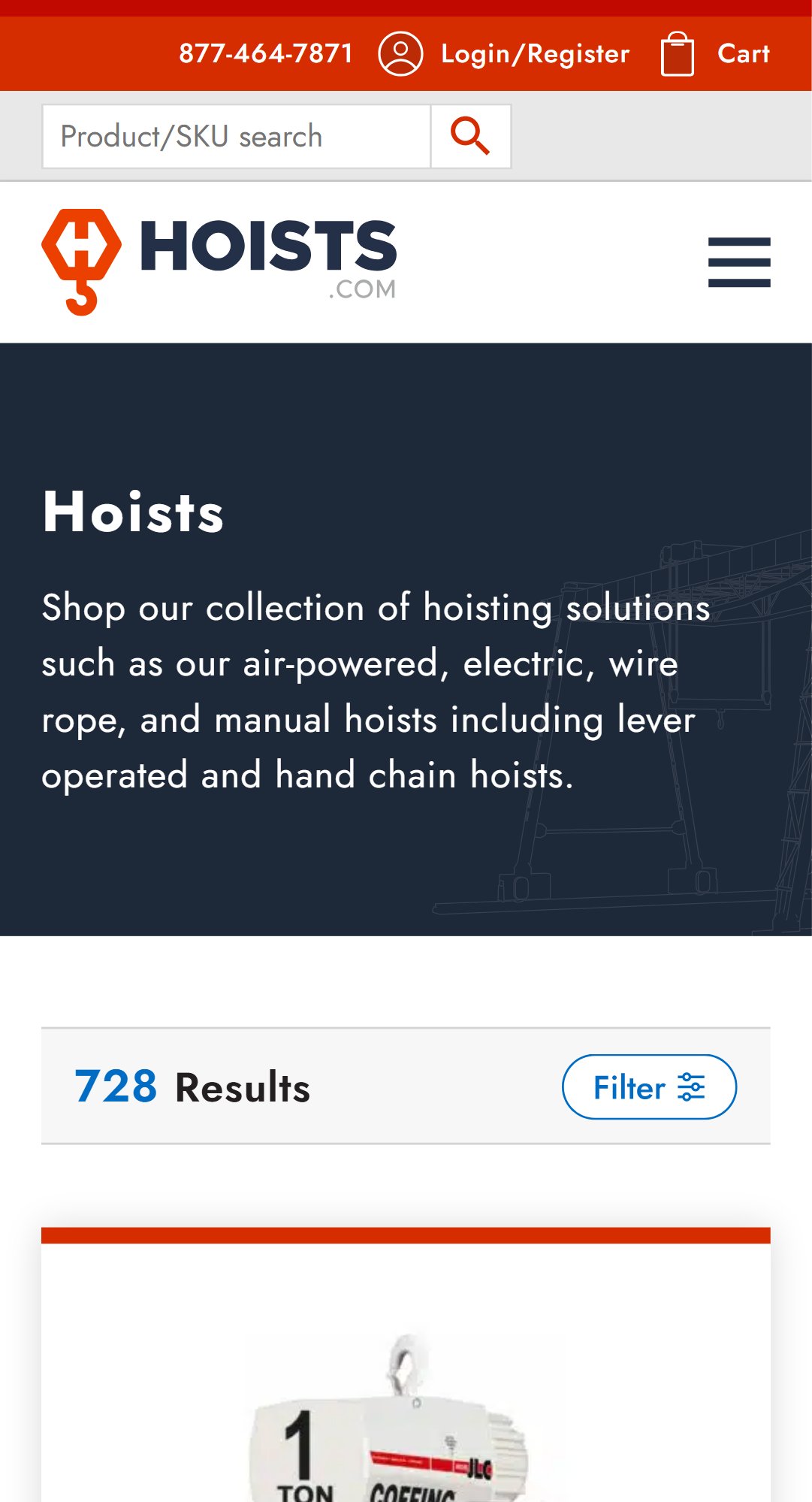
Every spec value was a standalone checkbox — lift heights from 1ft up, capacities to 20,000 lbs. Hundreds of options, no grouping, 5,000–10,000 visits per purchase.
Hundreds of checkboxes collapsed into intelligent capacity and height ranges that match how buyers think — light, medium, heavy industrial. Average purchase journey: two visits.

04 AI Chat & ERP Integration
Technical questions bottlenecked on the sales team. Freight quotes took 48 hours. Availability changed daily through pandemic supply chaos.
An AI chat tool answering spec questions in real time, Epicor ERP sync for live inventory and lead times, and cart-level LTL freight via Freightquote.
How It Was Validated
- Domain immersion with sales, mechanics, techs, and fabricators
- Tree testing of the 5-tier taxonomy — 91% task success
- Cognitive walkthroughs with maintenance managers and procurement officers
- ERP data QA across 3,500+ SKUs before launch
After Launch
- AI chat iterated continuously from real buyer questions
- Monthly technical SEO content — organic traffic +600% in 18 months
- Support-ticket analysis drove two major IA iterations
- Quarterly buyer interviews as the catalog expanded
The Outcome
One decision changed everything: make the filters match how buyers think, not how the spec sheet is organized. $1.2M in year one, $2M in year two, $12M annually now — that's information architecture compounding.
The Store Today