Case Study
Cards in Bars
A party game for bars. Your phone is your hand, the TV is the table, and there is nothing to install.
- Client
- Personal product — first venue is Innjoy in Logan Square, with its own deck of local cards
- Role
- Product Designer & Sole Developer
- Timeline
- Aug 2026 – Present
- Team
- Solo — design, front end, back end, deployment
The Challenge
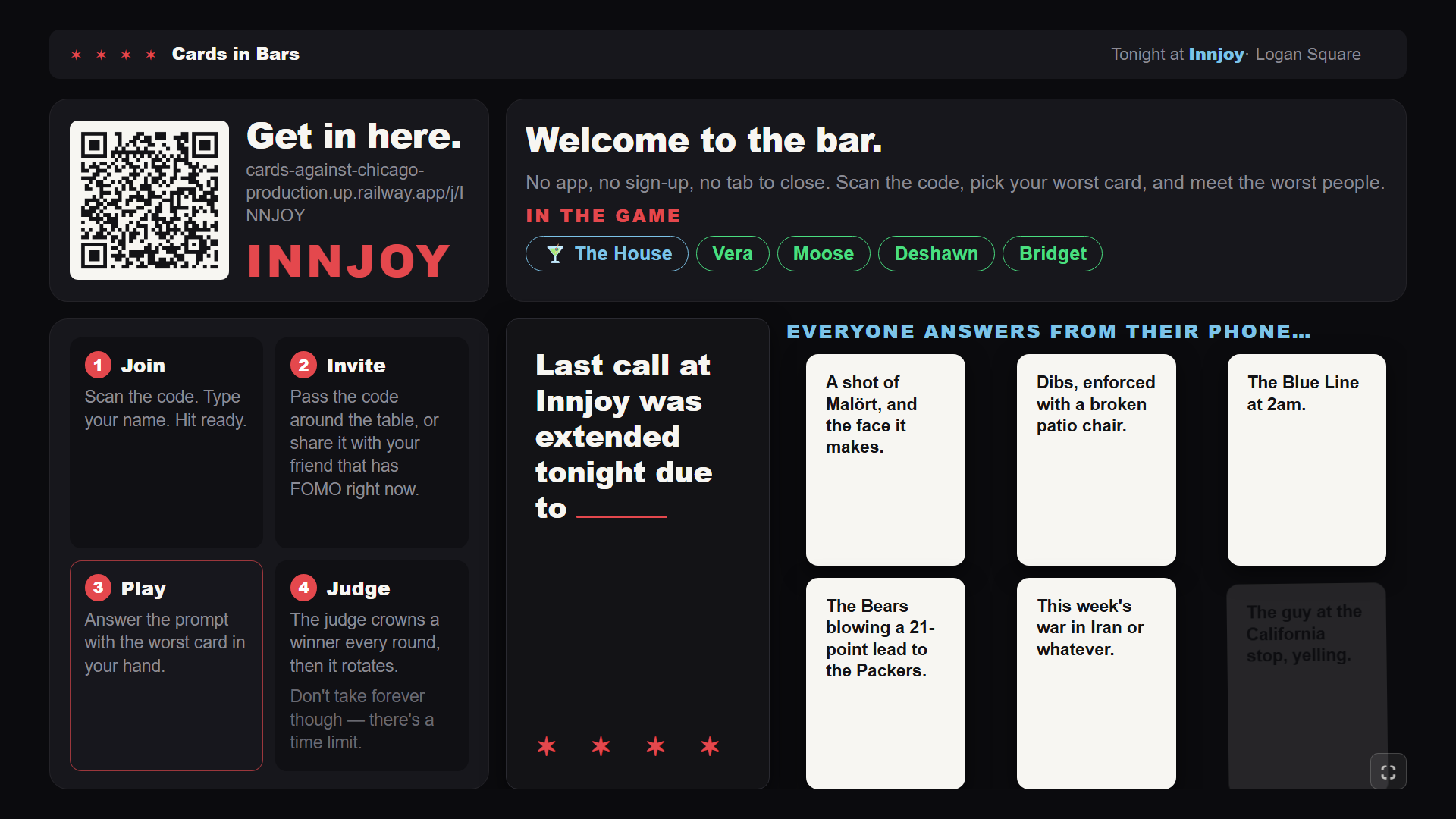
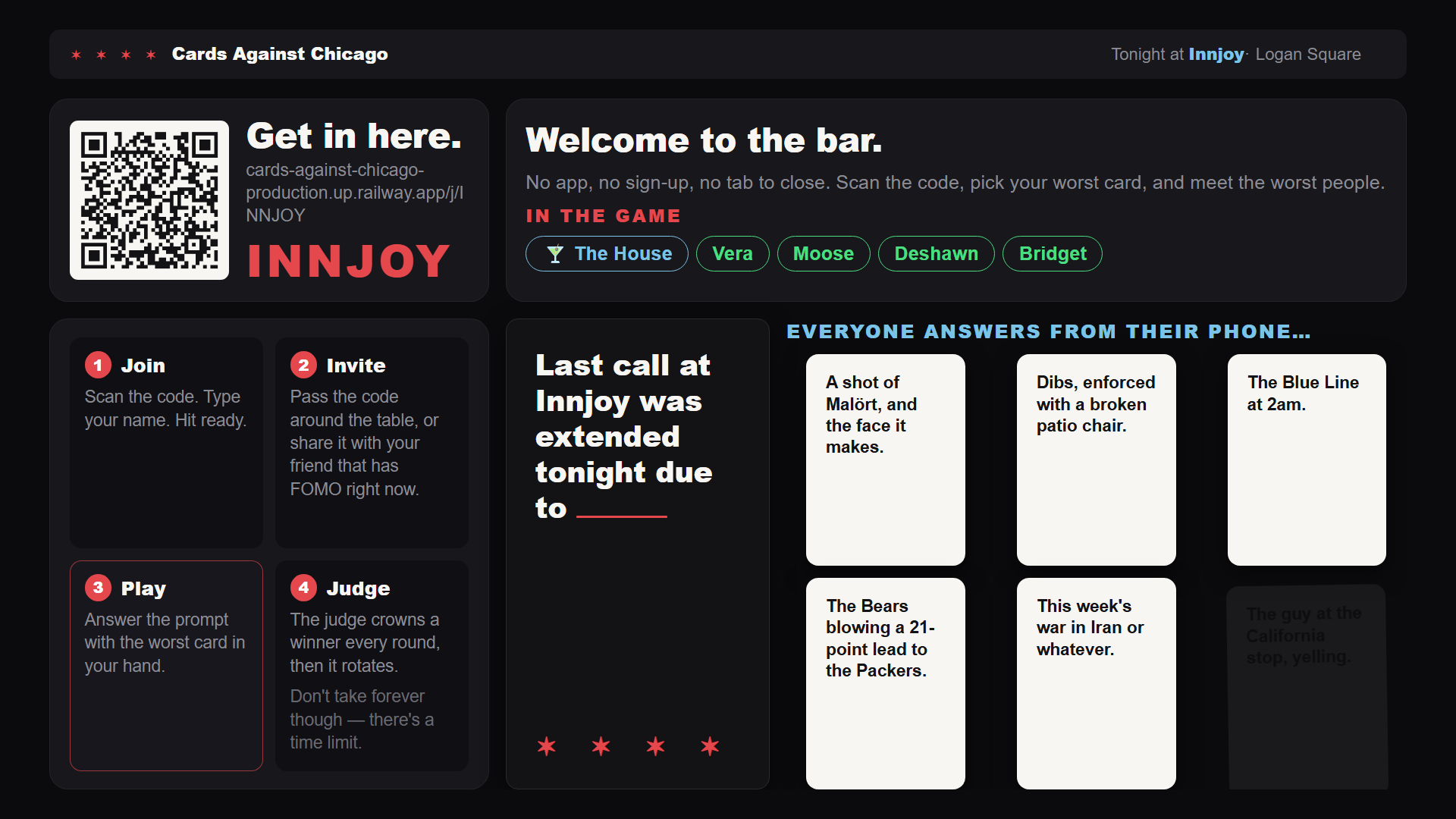
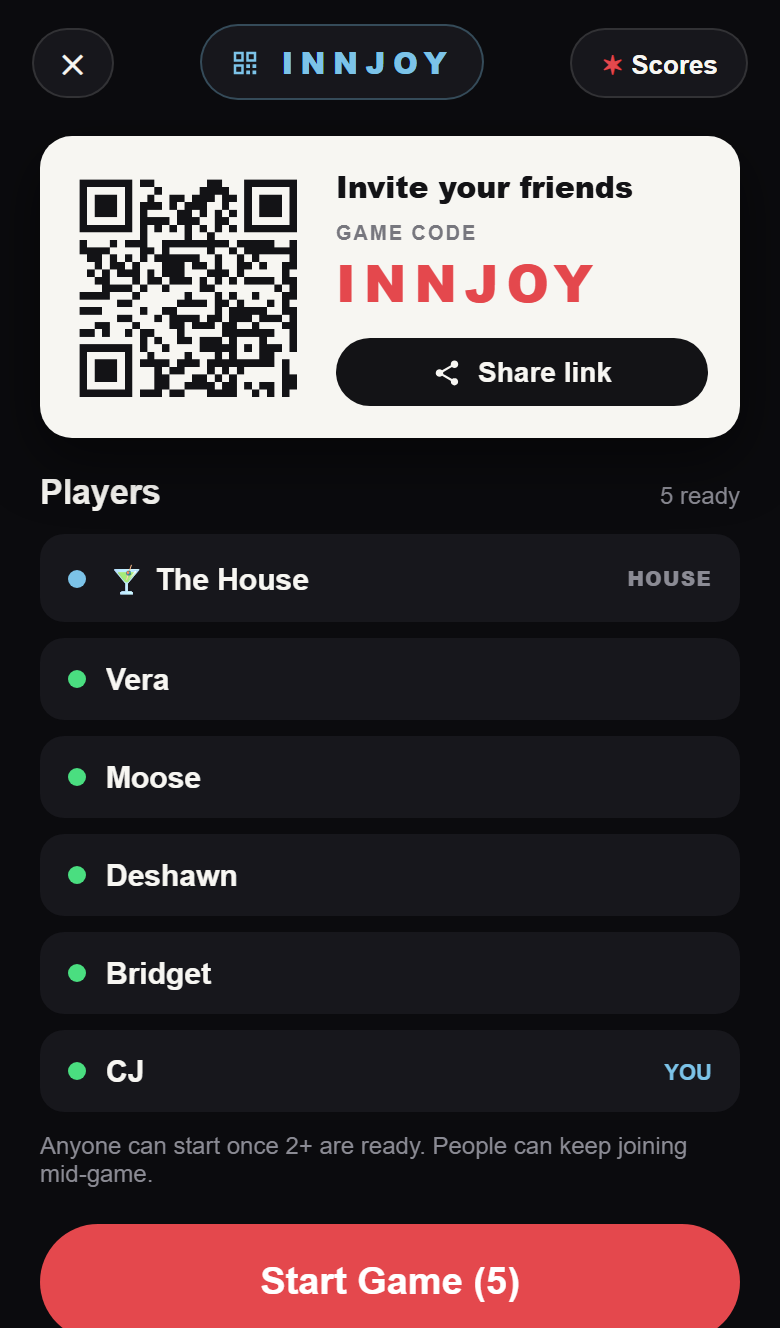
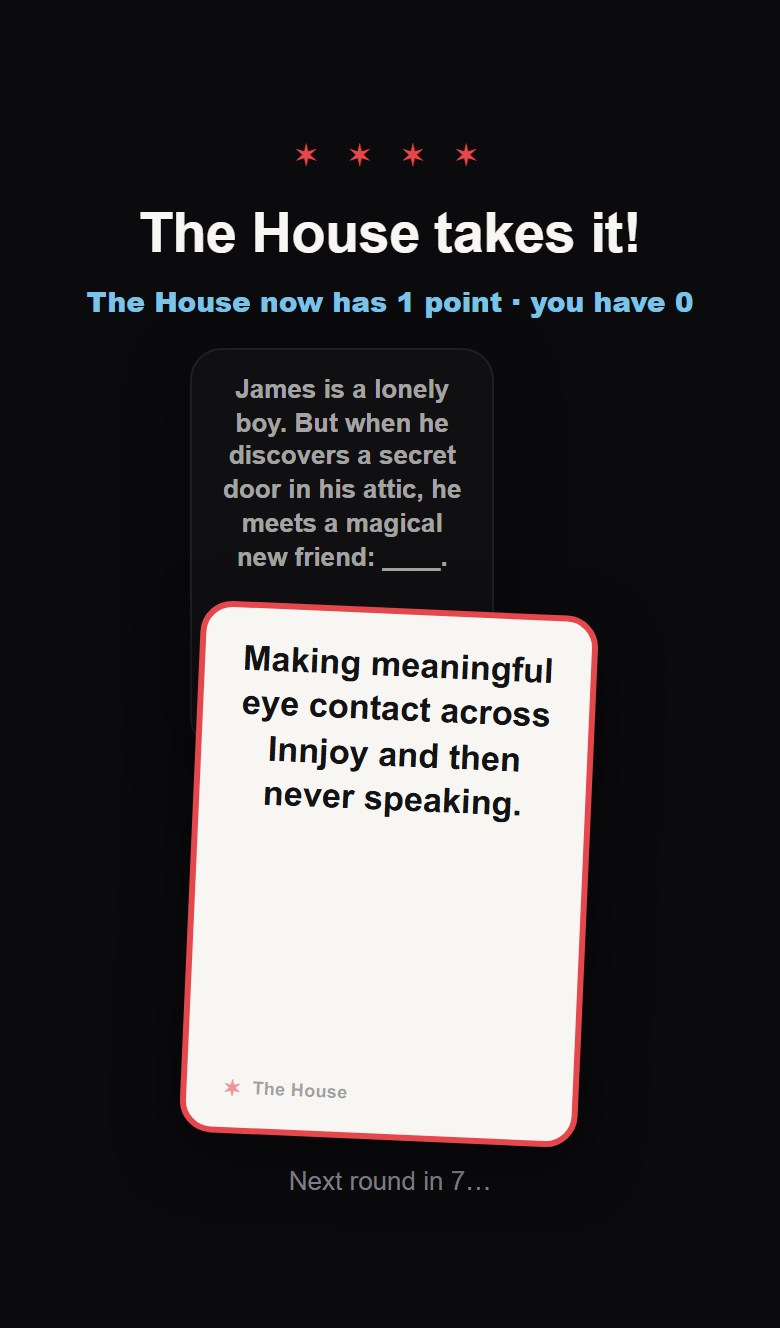
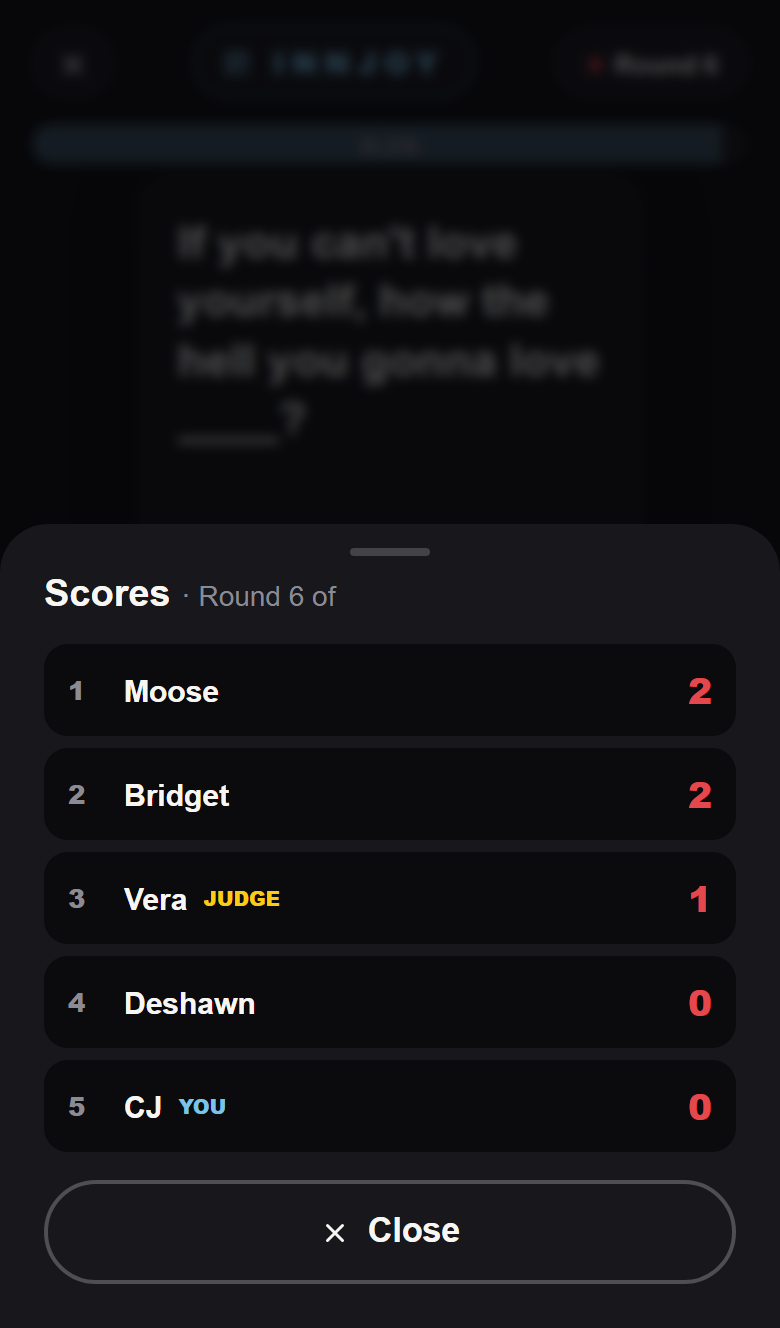
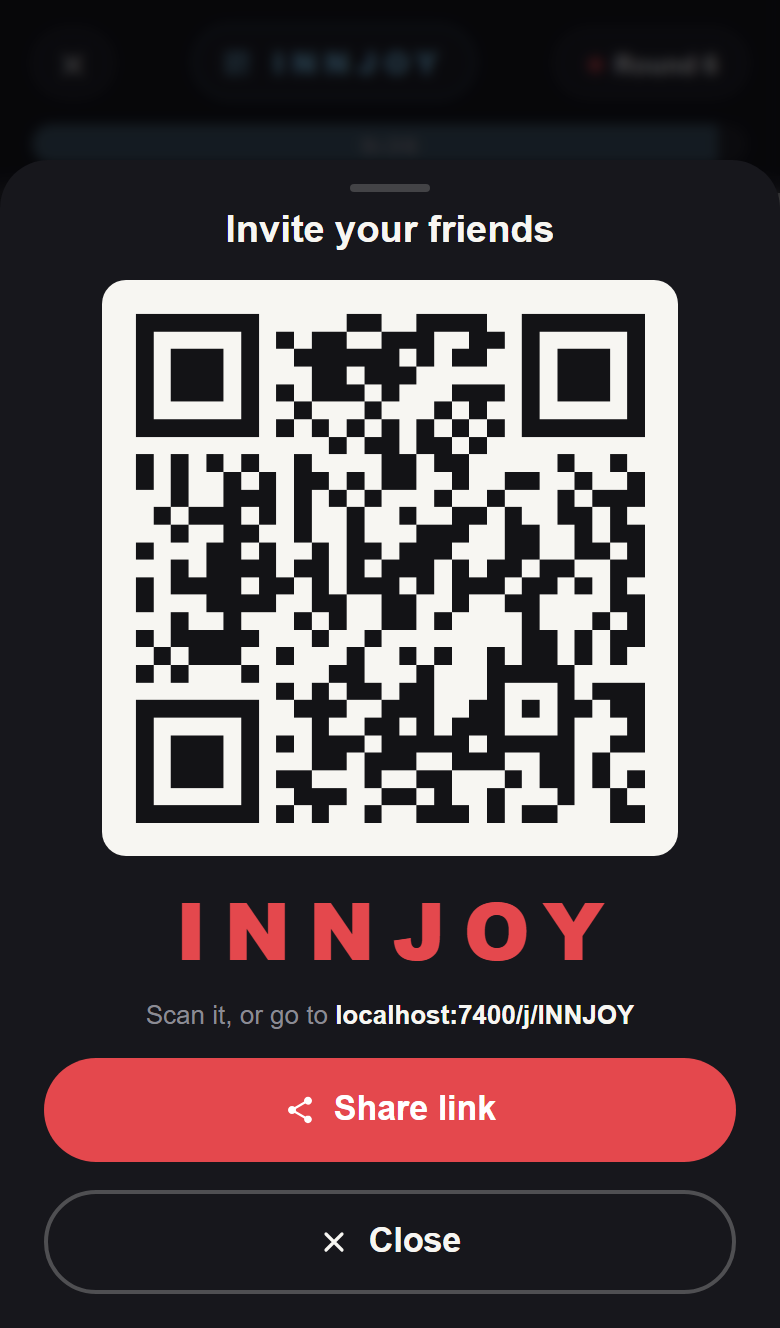
A Cards Against Humanity–style party game built for bars. The venue puts a QR and a permanent code on a TV; patrons scan it, type a name, and are dealt in from their own phone.
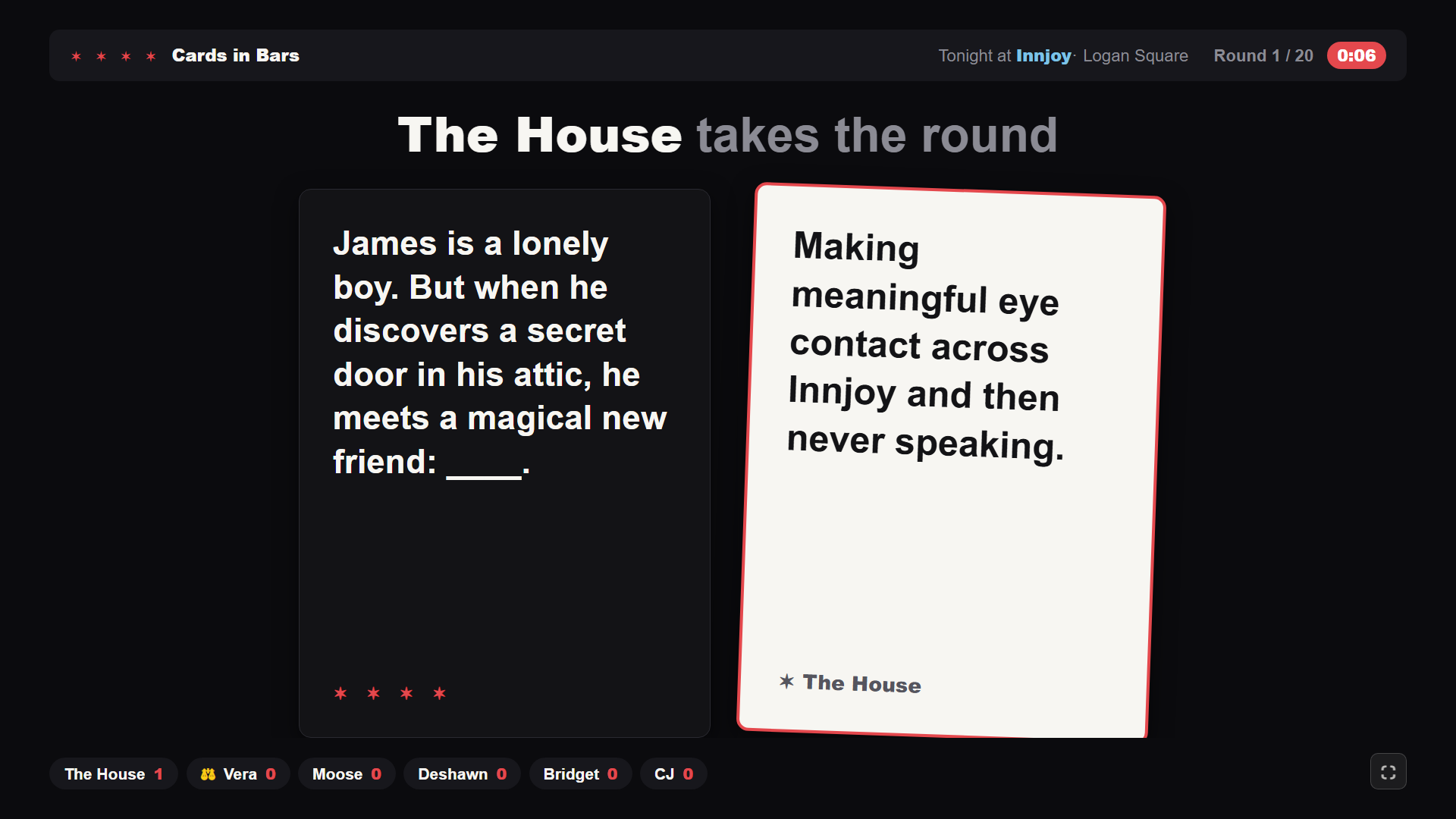
The core problem: split one game across two surfaces — a private phone and a public screen — so each shows what its audience needs and nothing it shouldn't. In a loud room, ten feet from the TV, with a drink in one hand.
What I Did
01 Getting in without an app
Nobody installs an app to play one round. Every second between seeing the TV and holding cards is a chance to give up.
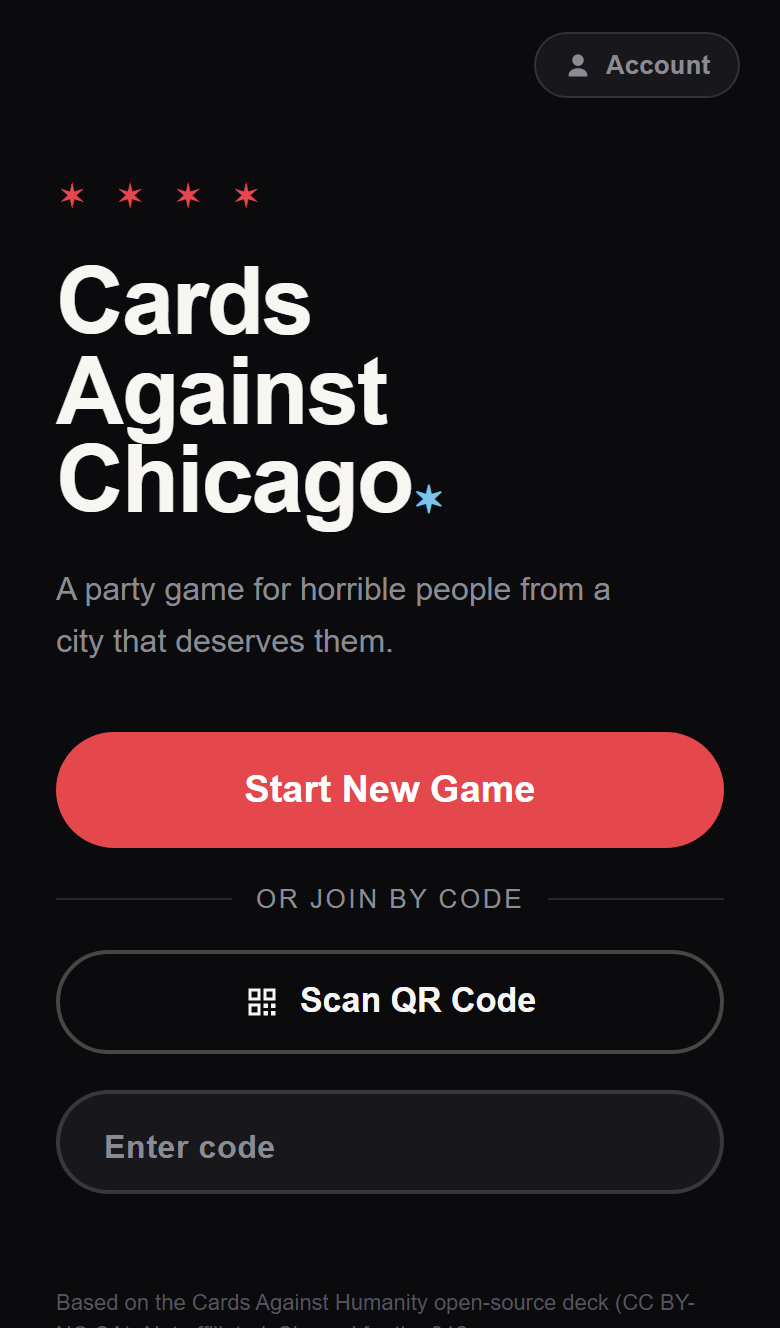
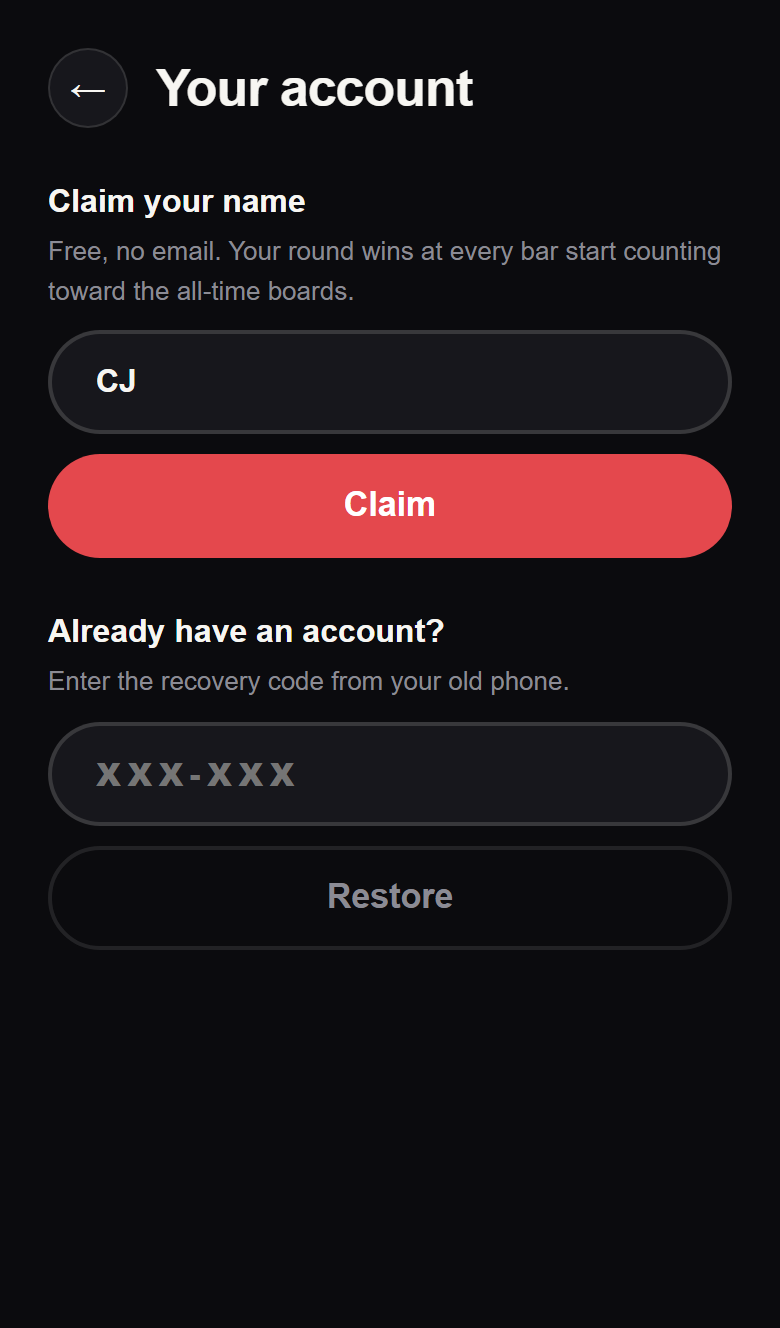
A permanent per-venue code and QR, printable on a table tent. Scanning drops you into the game; the only required step is a name. Accounts are optional and use a recovery code, not an email and password.
02 Two screens, one game
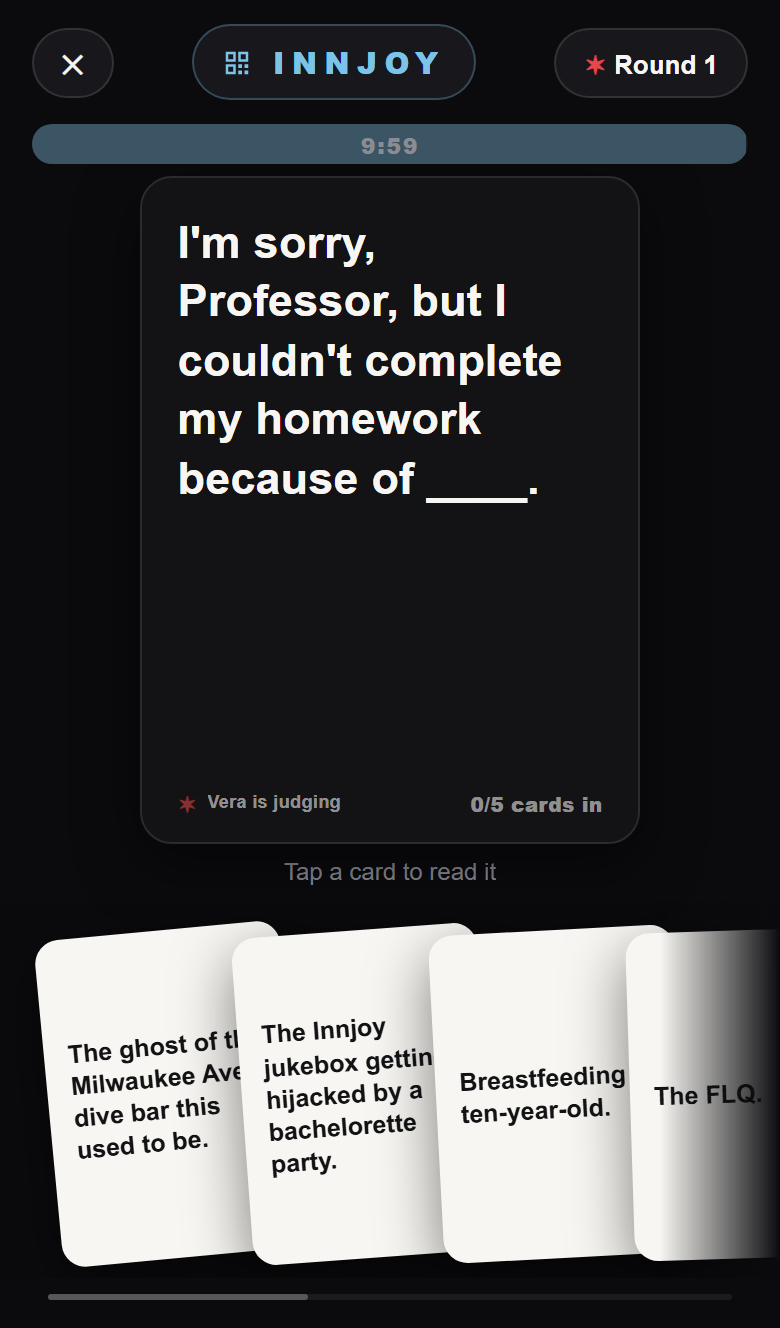
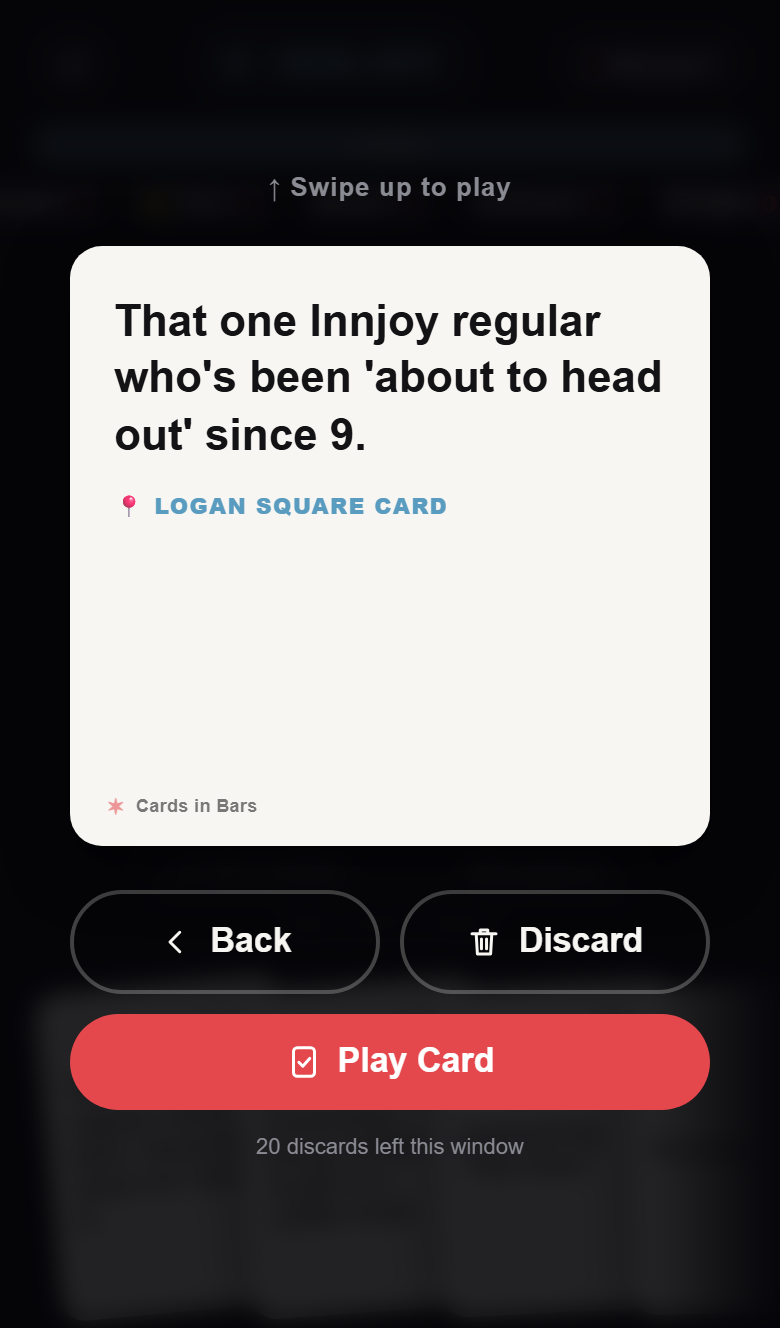
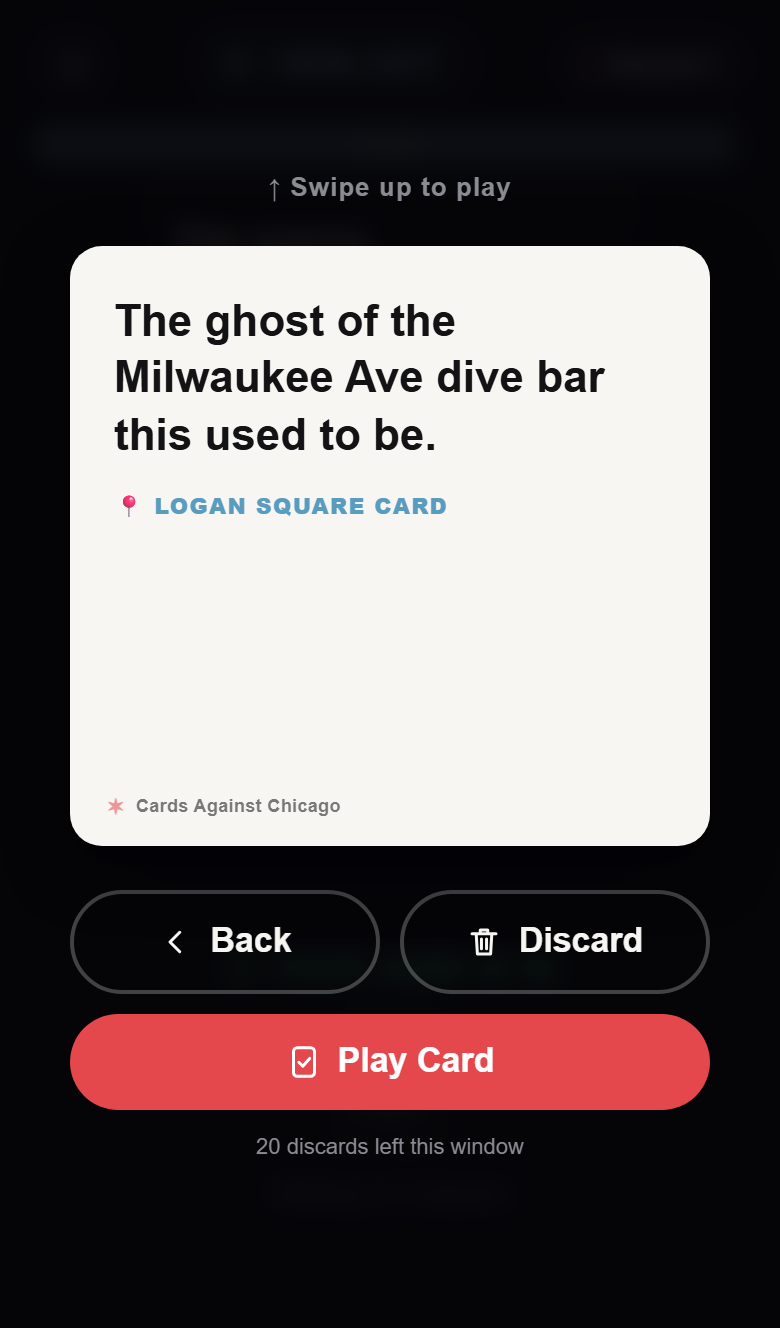
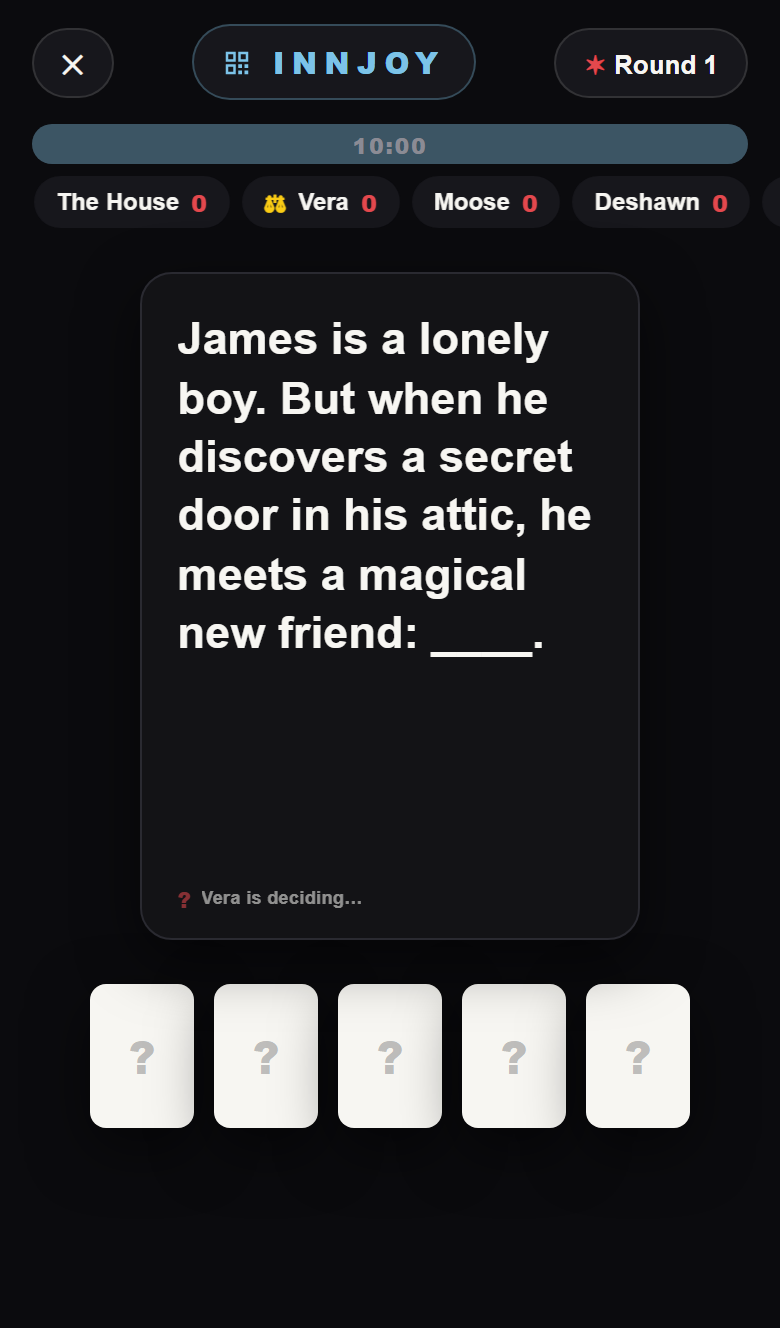
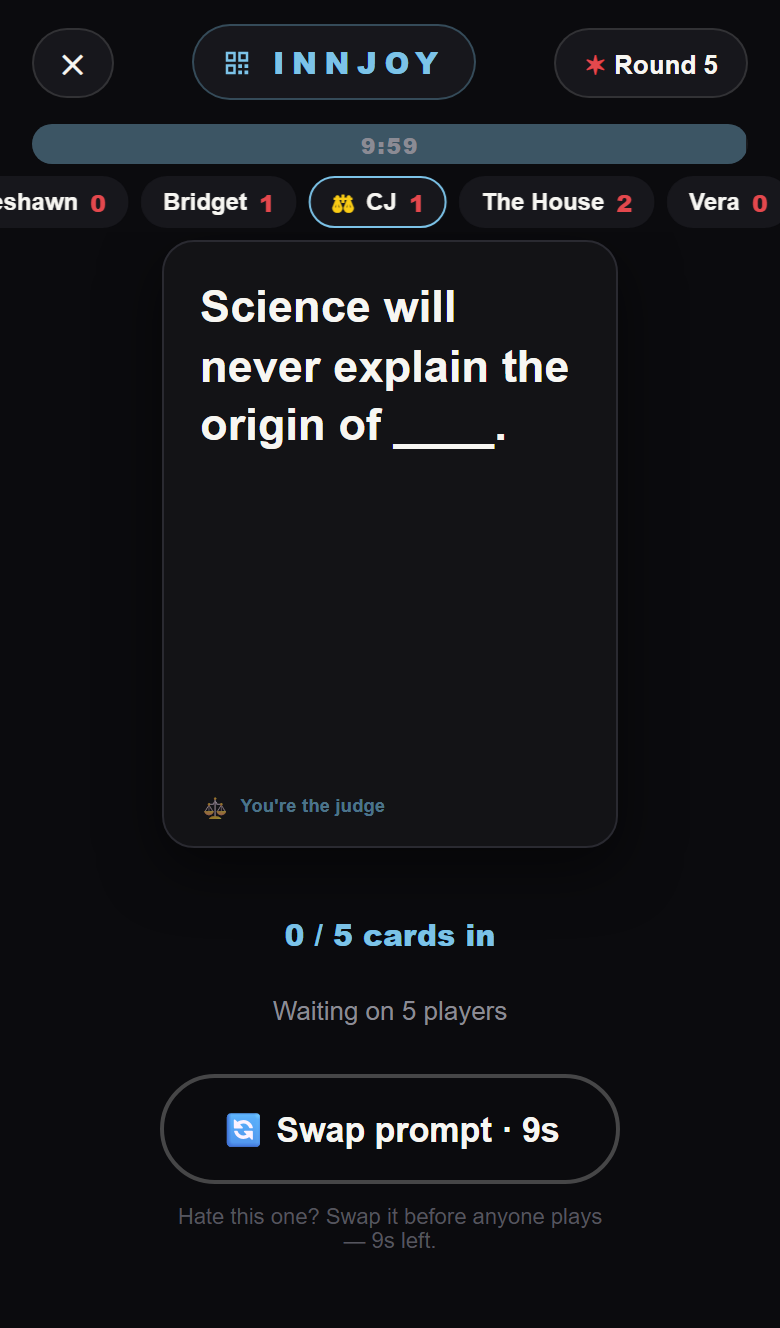
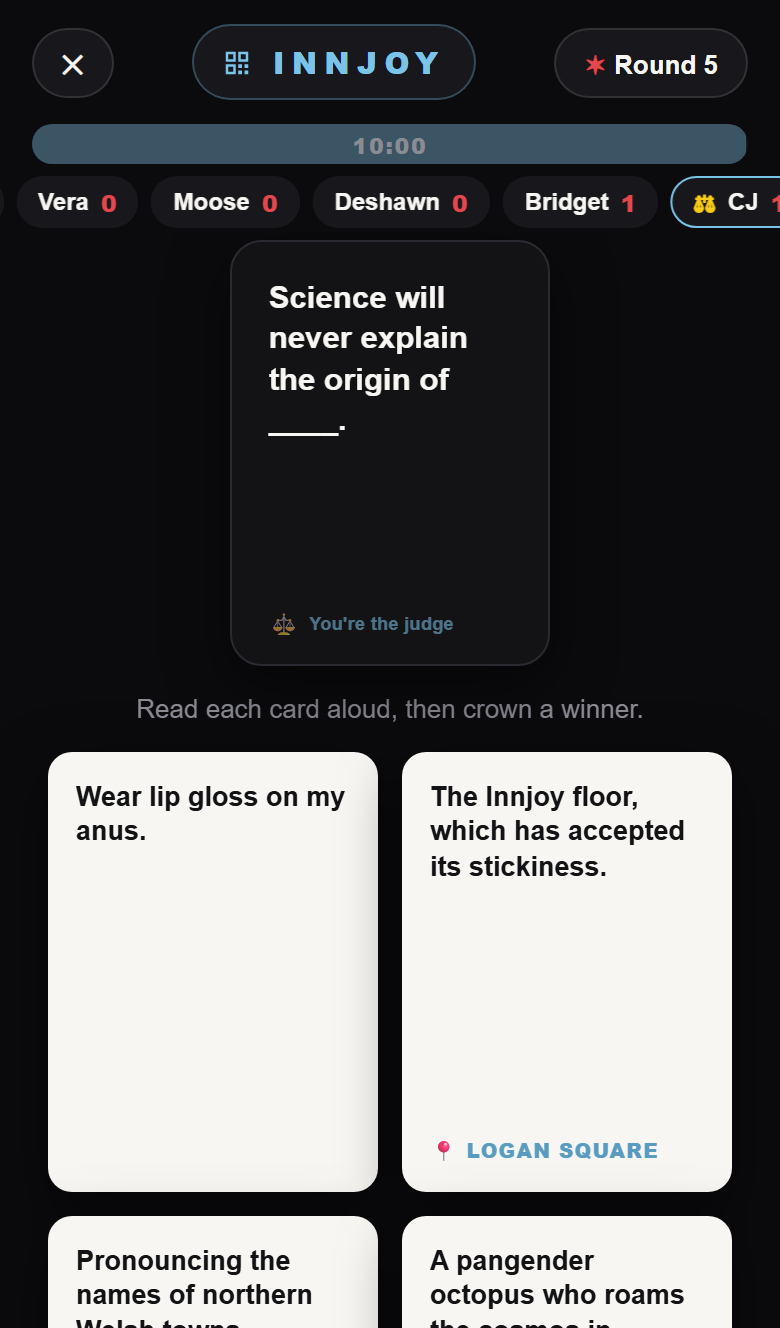
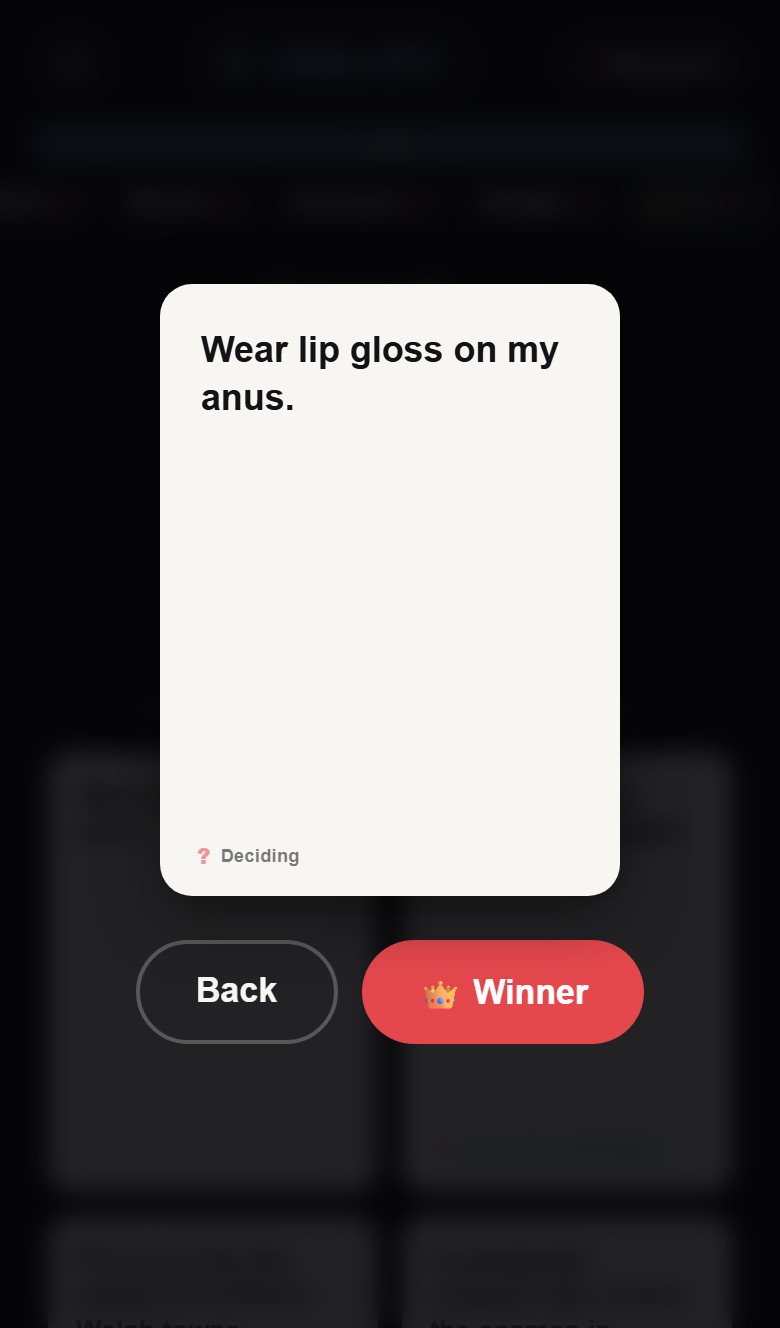
The phone is private, the TV is public. Show the wrong thing on either and the round is ruined — a leaked hand, or a shared moment trapped on one screen.
Each surface gets a different payload. Phones get their own hand and nothing else; the TV gets public state on a read-only channel.
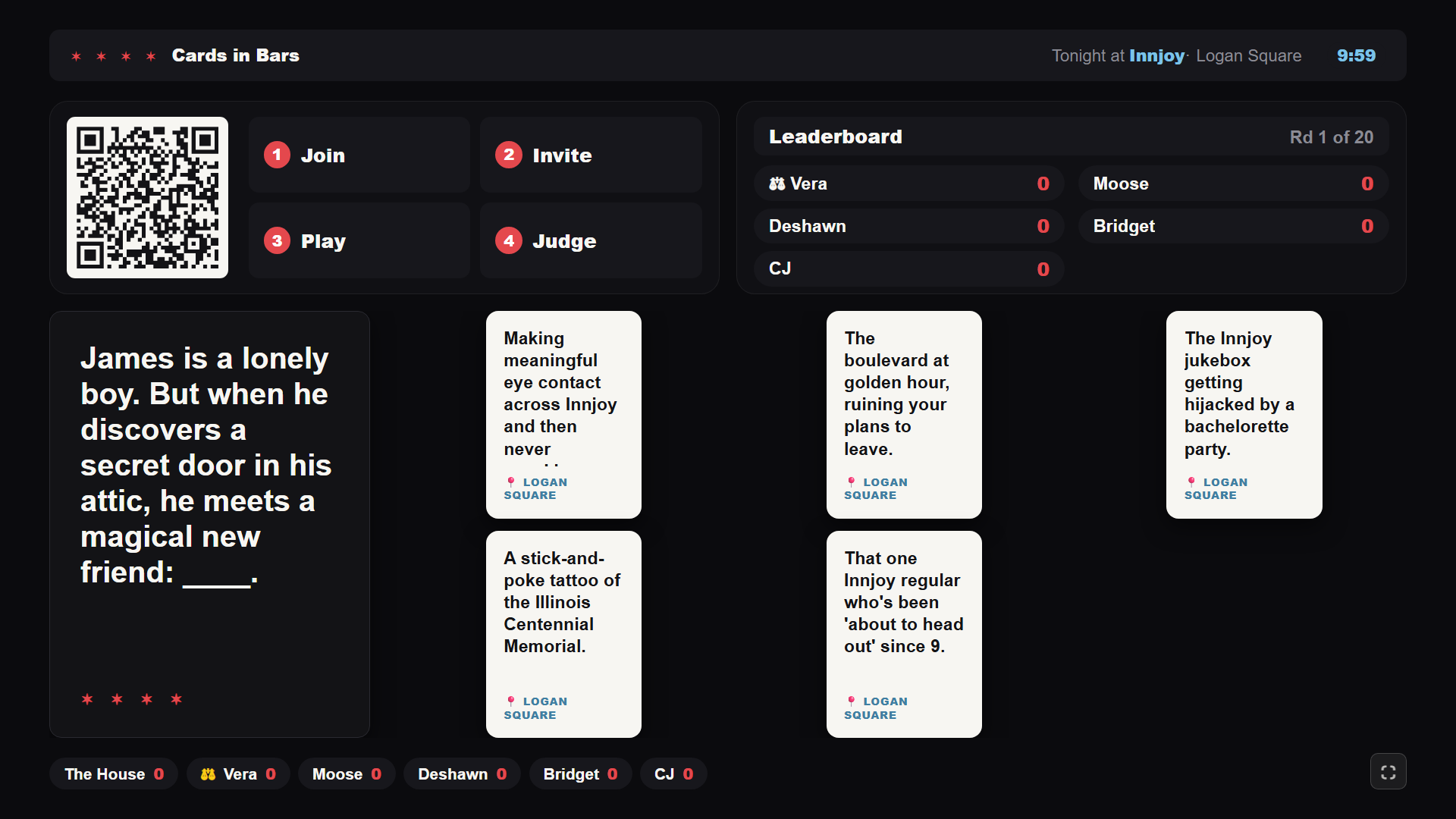
03 Designing for ten feet
The TV was designed at desk distance. Supporting copy sat at 21px on a 1080p panel, and the QR — the only thing that turns a stranger into a player — had a third of the screen while a demo took two thirds.
A viewport-height type scale with a ~24px floor at 1080p, and a nested bento layout with the QR as the hero tile.
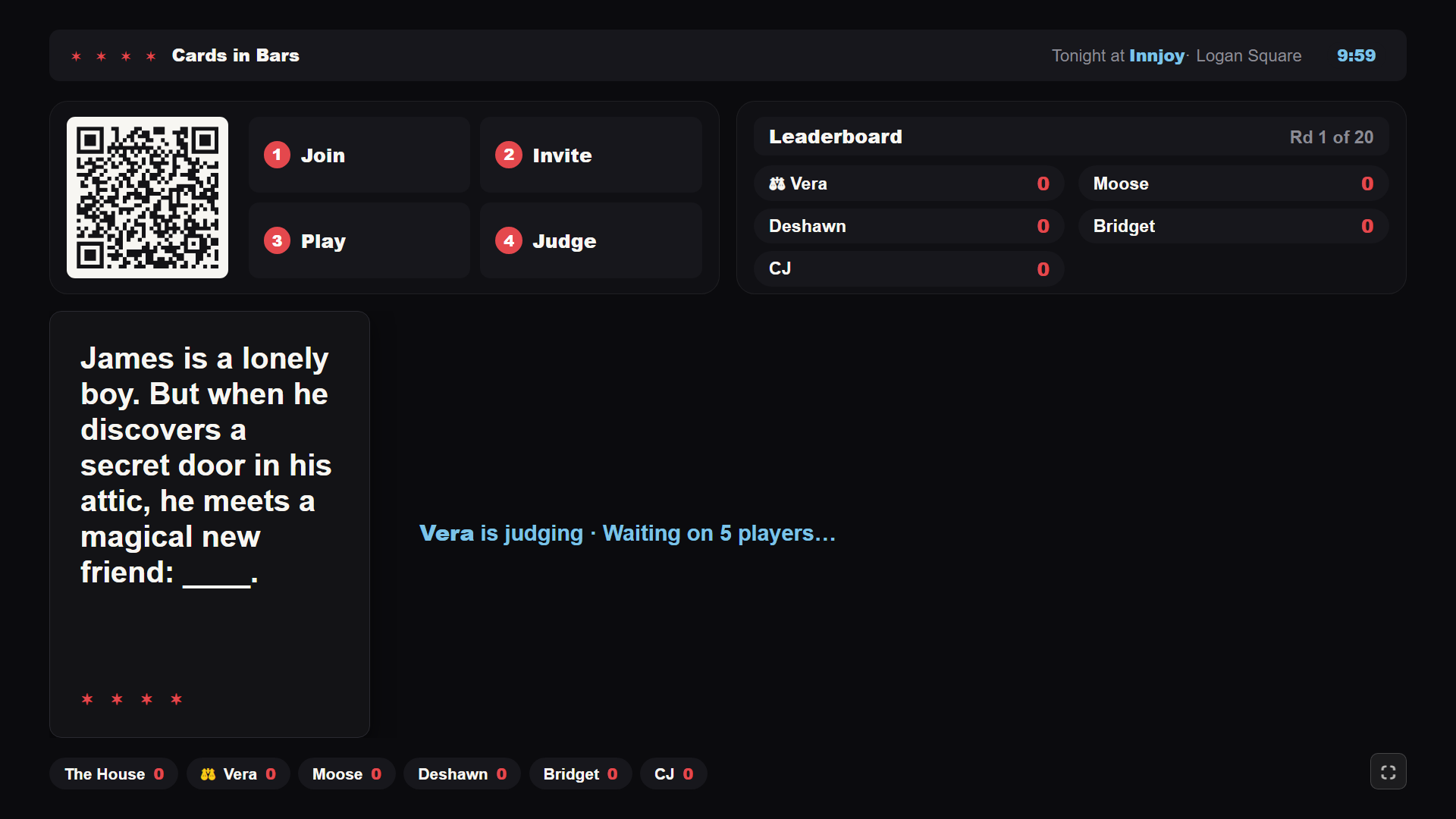
04 The review that found real bugs
The work had gone reactive — spot something, fix that one thing. Functional tests only prove code does what it was told to.
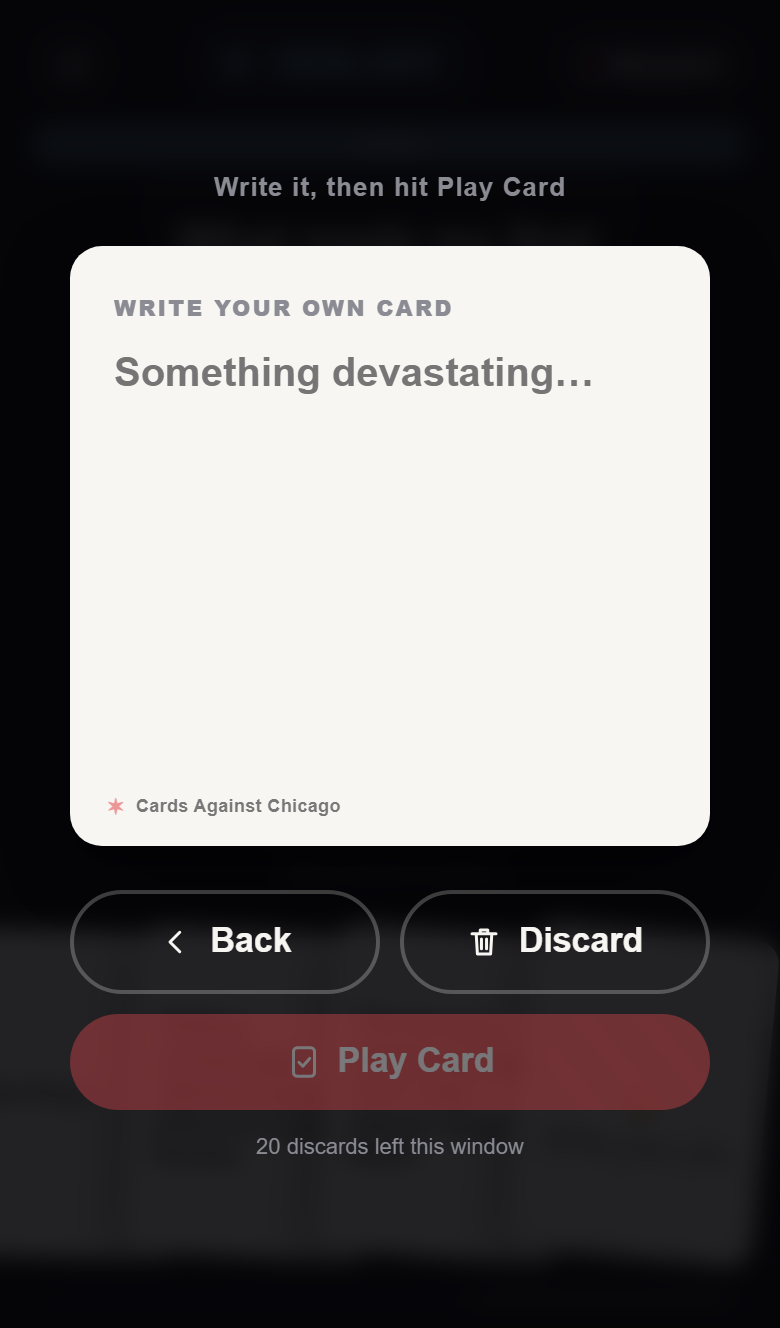
A screen-by-screen pass in player order, judged against measured values. It found a written card destroyed when a judge disconnected, a sheet advertising a swipe that did not exist, and an idle TV claiming someone was playing to an empty room.
How It Was Validated
- A headless harness drives real games over sockets — 23 assertions covering the deal, rotation, round expiry, discards and the 20-round cap
- A screen-by-screen design review of all 12 player screens and the TV, judged against measured values rather than impressions
- Killed the server mid-round in production to confirm the table and every phone recovered
After Launch
- Deployed on a persistent host with a mounted volume — games survive restarts and deploys
- A Playwright rig drives a real game and photographs both surfaces, so every screenshot regenerates in one command
- Next: the bar-facing admin screens, and a first full night at Innjoy
The Outcome
Reviewing an interface properly turned out to be quality control, not decoration — walking every screen in the order a player meets it found three real bugs that functional tests had missed. Building it alone meant every design decision had to survive contact with the system implementing it.
The Play — On Your Phone

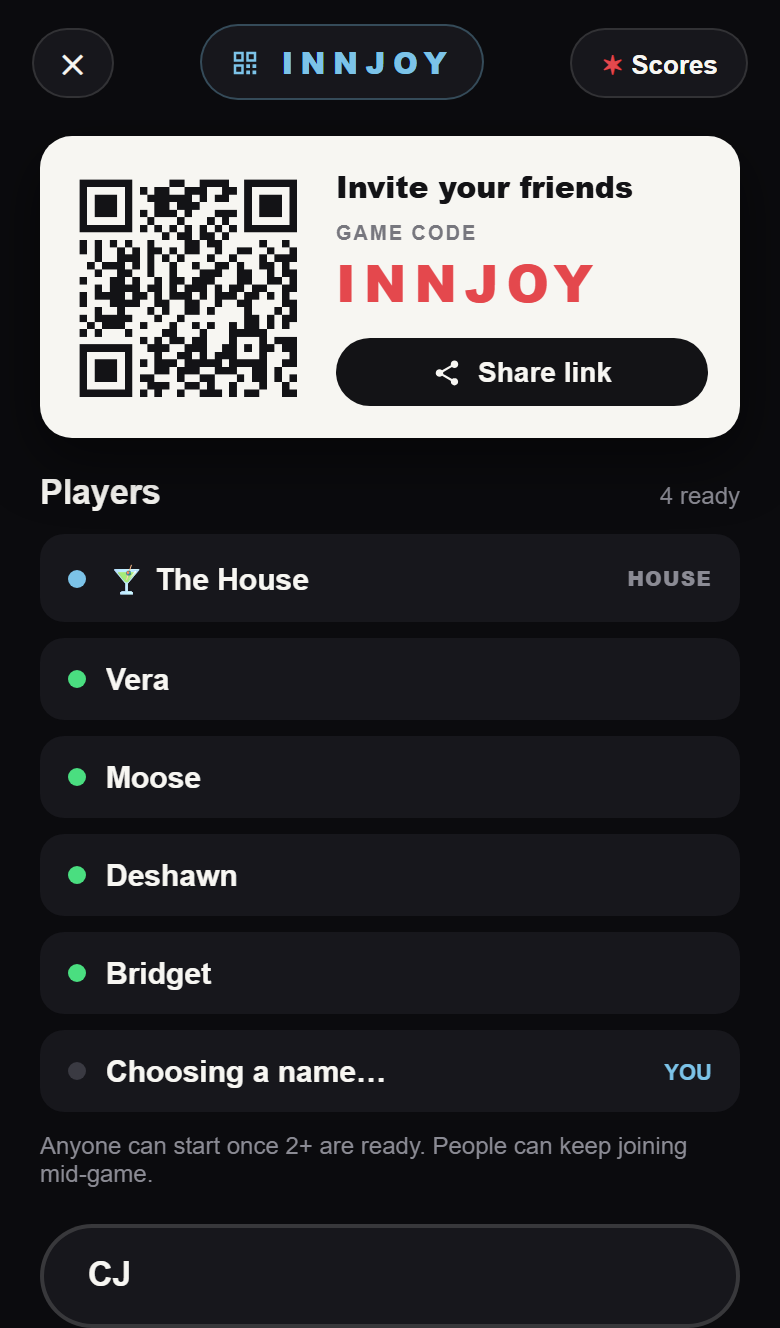
The Table — On the TV